
Humans are rarely one thing at a time.
We love people we resent. We stay loyal to things that exhaust us. We believe in honesty while still lying to protect ourselves.
We are systems built to hold contradictions, contrary to popular moral belief.
You may love your parents, yet you can still be angry at them for something till death. You are annoyed by your best friend, yet you show up every single time they are in trouble while muttering, “Here we go again.”
We know a particular political leader or party is a nuisance, yet we still go and vote for them. We hate not being able to express our true anger, yet when that creepy boss walks in, we put a smile on our face because that is what diplomacy teaches us.
We are tired of explaining to our spouses or partners how irresponsible they are, yet we are ready to clean up after their mess every time, both physically and metaphorically.
We constantly hear our parents complain about their siblings, and eventually we begin disliking our uncles and aunts too, to the extent that we do not even want to see them anymore. Yet when we ask our parents to stop entertaining them, we are the ones scolded for being hard-hearted.
All these examples reveal a strange dichotomy in human behavior, one that even we fail to understand within ourselves. When others do it, we are quick to call them hypocrites. We believe one feeling cannot exist if another feeling is stronger.
We pressure people, especially those close to us, to choose one difficult truth over another. Yet we ourselves continue to exhibit contradictory emotions of love and hate without even recognizing it.
This leads to an interesting truth about the nervous system: human beings find peace not in perfection, but in their ability to hold two conflicting feelings at once.
Yet humanity is constantly taught in absolutes. Absolute morality. Absolute goodness. Absolute honesty. Absolute loyalty. We are told the ideal human is clear, certain, and unwavering. But if you observe the human mind closely, it begins to crumble under the pressure of perfection.
The brain is full of conflicting thoughts, mistakes, impulses, imperfections, and moral dilemmas. The more we fight this truth, the more difficult it becomes for us to grow.
We place chains upon our moral flexibility. Instead of arriving at our own understanding through mistakes, experience, and reflection, we demand that people display only one acceptable behavior and belong to only one school of thought. This creates pain inside us.
The pressure to choose one truth slowly damages our ability to make better choices. It creates distance in relationships. It pushes us toward only those people who validate every contradiction inside us. And when that validation is absent, it can freeze us emotionally or push us toward addictions, numbness, escapism, or paralysis. Sometimes, it may even create an artist.
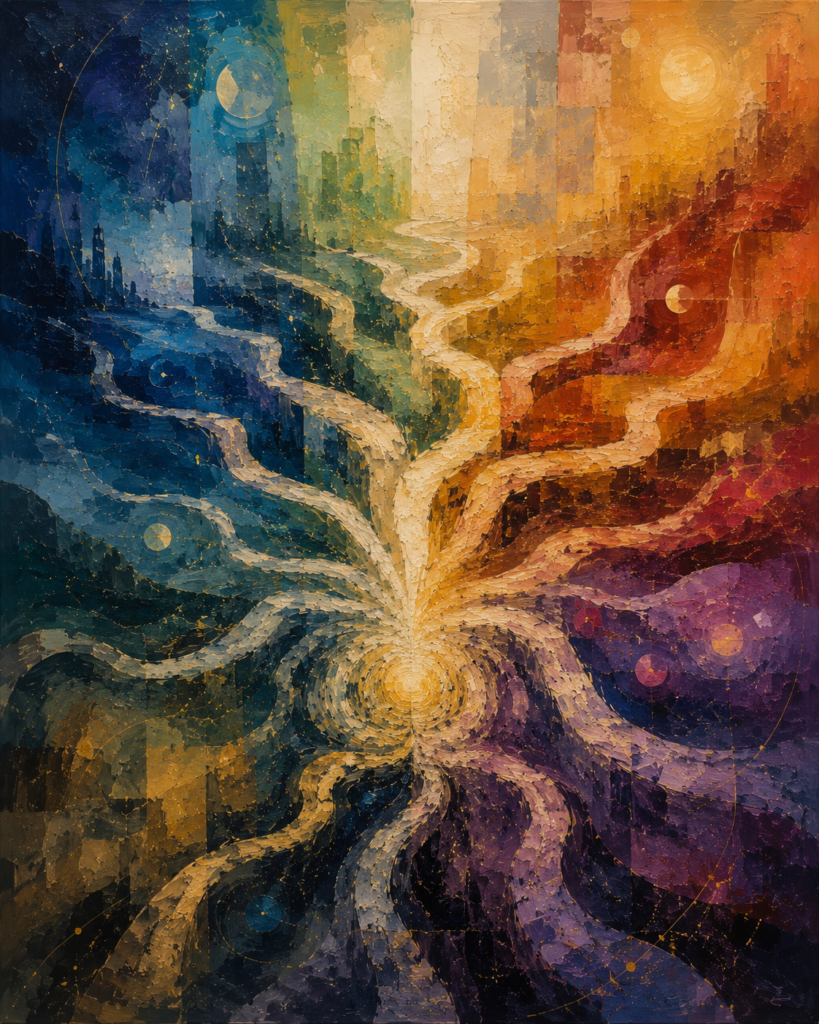
The behaviors and emotions within humans can be contradictory, but the values imposed upon them are often rigid and singular. We are told we cannot hold conflicting beliefs, even though the human brain naturally does. That is probably the biggest coping mechanism that the human brain has.
And this contradiction reveals something deeper to me. This conflict of wanting to be a certain way but behaving in a different way reveals something about our inner world.
I believe the values we cling to the hardest are often born from the places where we were hurt the most. The thing you judge others for most intensely is often the thing that frightens you the most internally. A kind of projection.
If someone is deeply against theft, perhaps something precious was once stolen from them, emotionally or physically, and they never recovered from it.
If someone aggressively pushes a healthy lifestyle, maybe they have witnessed an illness destroy someone they love. Maybe they are scared of being dependent on someone one day and rejected while going through a difficult illness. They are scared of being vulnerable. Maybe they took care of someone close and got so deeply hurt in the process that now they don’t want to inflict the same pain of caretaking on their loved ones.
If someone insists on stable jobs over artistic careers, perhaps they once watched a person struggle financially, or perhaps they themselves were denied the freedom to pursue what they truly wanted.
Sometimes the values we defend most passionately are not just principles, they are protective walls around old wounds.
And I experience it is important to give ourselves and others the freedom to discover our truths without shaming contradiction or emotional complexity. Conversation helps us understand that many people behave the way they do to protect themselves, avoid fears they are not ready to face, or survive truths they do not yet have the courage to confront.
Grace could guide this journey in a gentler way.
Humans exhaust themselves trying to become morally pure. Is it worth it? Perhaps. But can the journey be gentler? Absolutely.
We often mistake healing for certainty, as if maturity means becoming unwavering and untouched by contradiction.
But maturity is not the absence of conflicting feelings. It is the ability to hold them without tearing yourself apart , I believe.
To love and still feel anger.
To leave and still miss someone.
To forgive and still remember.
To fear becoming your parents while slowly understanding them too.
The mistake we make with humans is demanding certainty from people who are still trying to understand themselves.
Contradiction is not always confusion. Sometimes it is evidence of an internal negotiation between fear, morality, survival, desire, love, and experience. Sometimes it is growth in motion.
Healing is not about becoming emotionally absolute, but about questioning your inherited beliefs, your rigidity, your projections, and your fears until you slowly arrive at a truth that genuinely feels your own.
Not borrowed.
Not imposed.
Not fear-driven.
But understood through living.


Leave a Reply