Tag: psychology

  • Mirror and Tango

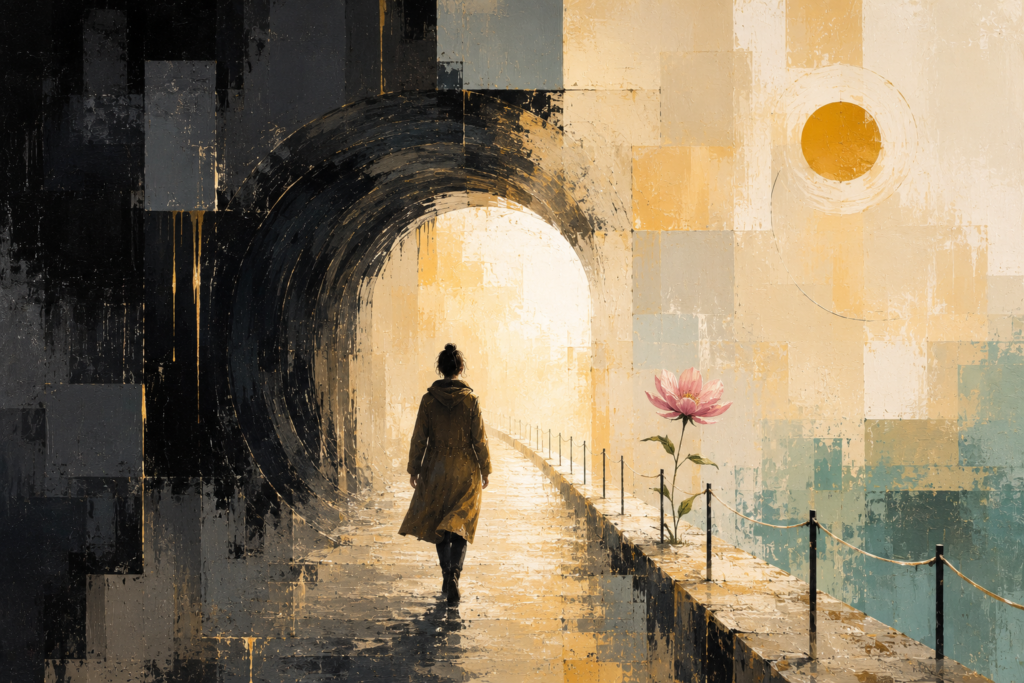
    Marriage is a maze.

    No matter how much you prepare for it, you still find yourself standing in situations that make you wonder whether you prepared at all.

    The first decade of marriage is particularly interesting. Most couples face some of their toughest storms during the first five years. Many go on to build healthy marriages, but those early years can be surprisingly difficult to navigate.

    Becoming a parent during this period is like facing a tsunami in itself.
    But marriage, with or without children, is already enough of an event.
    It is not just a meeting with another person. It is an intervention with yourself.

    The most amusing characters in this entire story, according to me, are the parents/elders of the couple.
    Typically, anything good about their grown up child is attributed to the family. Any uncomfortable change, however, is attributed to the child’s partner.

    It is exactly how things worked during childhood.
    Anything kind, intelligent, or impressive the child did was credited to the family. Anything rude, rebellious, or unkind was blamed on a new friend.

    It is as if the child has no nature of their own. And to some extent, that is true.

    Children borrow heavily from the world around them. They imitate behavior before they develop a personal understanding of it.They are still forming their perception of the world.They observe, absorb, and experiment.

    A friend, a movie, a teacher, a sibling, or even a brief interaction can influence how they behave, be it temporarily.

    But while behaviors can be copied, feelings usually aren’t.

    What children often imitate/notice is the attention surrounding a behavior. They notice what gets rewarded, what gets punished, what gets a reaction, and they learn from that.

    But marriage is where this explanation starts becoming less convincing.

    There is a general perception that adults become someone else because of the company they keep. After marriage, parents may think their child’s spouse changed them.

    Partners often tell each other:
    “You bring out the worst in me. I haven’t seen myself behaving like this before.”
    I have a slightly different understanding of it.

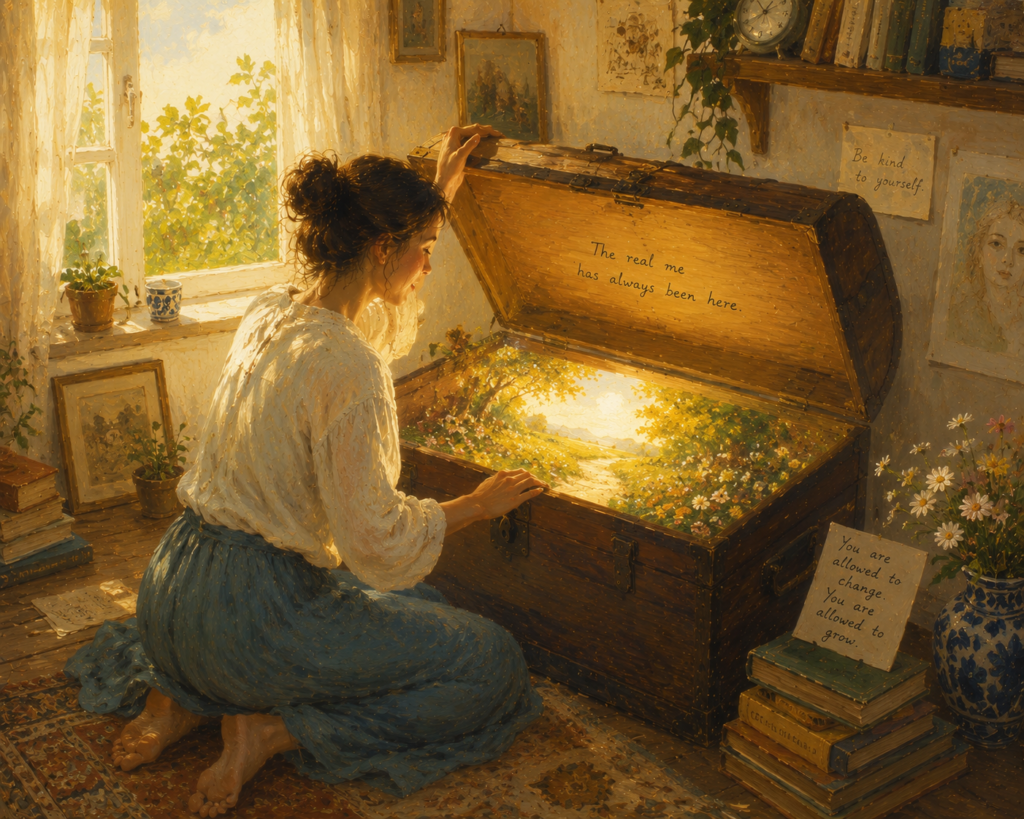
    I think marriage brings out what was always there. It just never had a vent.

    From the kind of partners we choose to the ways we push our loved ones away, the things that shock other people were often present long before marriage. Nobody created them.

    Marriage simply lowers the energy available to maintain a facade.

    The demons were always there. Now they are sitting on the porch, giggling!

    What I’m trying to say is that marriage is rarely something entirely new behavior wise on an individual level. Especially in its early years, it is a reflection of who we already are and the childhood and the family history we carry with us.

    Marriage brings our vulnerable self to the surface. And to protect that vulnerable self, we do all kinds of strange things.

    We become controlling, avoidant, defensive or critical.

    The healthier we are emotionally, the healthier those reactions tend to be. The more wounded we are, the more dramatic they become.

    So if you think your partner is being irrational, strange, or difficult, spend some time observing their relationship with their primary caregivers.
    You will find a lot of answers there.

    If they were never allowed to express their feelings as a child, they may now express them with overwhelming intensity, because this relationship finally feels safe enough to do so, or they want to define that boundary somehow.

    Sometimes what appears as anger is fear looking for protection. They are frightened on the inside, so they become louder on the outside.

    Some people even thrive on chaos and drama because chaos feels familiar. Peace feels foreign. Predictability feels suspicious. The nervous system often mistakes familiarity for safety.

    If childhood taught them to shrink themselves around money, resources, or opportunities, they may carry that scarcity mindset into marriage and unintentionally pull their partner into it too.

    Sometimes the opposite happens.

    The more restricted they were growing up, the more expansive they became as adults.
    The more silenced they were, the louder they became.
    The more controlled they were, the more fiercely they protected their freedom.

    The point is not to excuse unhealthy behavior. The point is to understand where it came from.

    When you learn to trace a reaction back to the life that shaped it, many things begin to make sense.

    That is why I think one of the most valuable things you can do in the first decade of marriage is to understand your partner’s life before you enter it.

    Not because the past determines the future. But because it reveals the patterns that are most likely to show up in it.

    Marriage

    The longer I observe marriage, the less I see it as a union of two people and the more I see it as a meeting between two histories.

    Two childhoods.
    Two nervous systems.
    Two sets of fears, hopes, wounds, and coping mechanisms.
    The relationship simply becomes the place where they finally meet.

    Marriage is the mirror.

    Some people spend years trying to fix the reflection standing across from them. Others become curious about why that reflection exists in the first place.

    Then the real questions begin.
    Do you feel equipped to hold the wounds that still exist?
    Do you have the patience to keep offering a mirror?
    Are they willing to look into it?

    All these questions can help you decide whether your partner can match the level of awareness you are at.
    Because the most important question of all:
    Are you willing to do the same with your own patterns?
    Because marriage is not just a mirror for your partner.
    It is a mirror for you too.
    And sometimes the hardest reflection to face is your own.

    If both of you are interested in finding and figuring out your own patterns, the chances are you will grow together but if only one of you is taking the burden of growing with changing times then it will look like driving a car with one tire bigger than the others, a marriage that is wobbly.

    This is not a guide on how marriages work, but a nudge on it is more than what looks on the surface. It requires work.

    The real work starts when we are ready and it may require professional help. Whether you do it for this marriage or the relationship that comes later (divorce or another romantic relationship or parenting), that’s a personal choice. But it will always help to learn how much of your behaviour is intentional and how much of it is a response to something at which you had no control.

    In the end, marriage is a lot like a tango. It takes two people to create the dance, but each dancer is responsible for learning their own steps. We are not burdens waiting to be dragged across the floor. We are individuals learning our own rhythm, hoping to find someone willing to learn theirs too.

    And when both people are willing to do that, the dance becomes beautiful.

  • One Life. Many Truths.

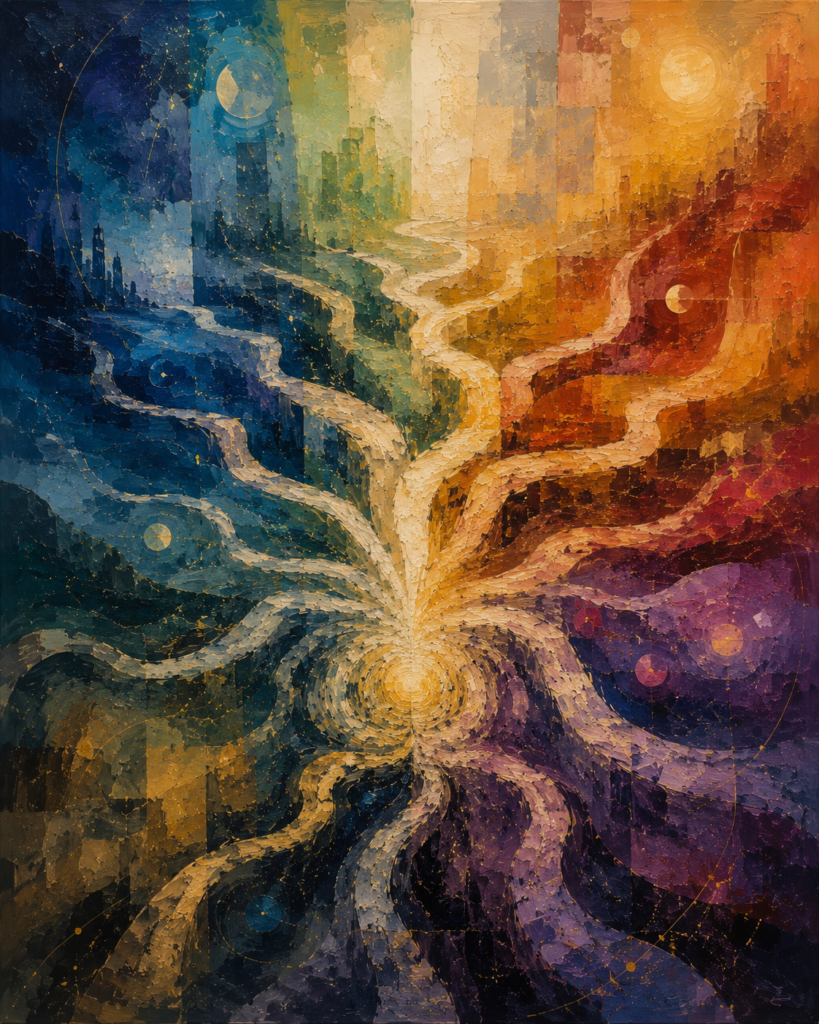
    Humans are rarely one thing at a time.

    We love people we resent. We stay loyal to things that exhaust us. We believe in honesty while still lying to protect ourselves.

    We are systems built to hold contradictions, contrary to popular moral belief.

    You may love your parents, yet you can still be angry at them for something till death. You are annoyed by your best friend, yet you show up every single time they are in trouble while muttering, “Here we go again.”

    We know a particular political leader or party is a nuisance, yet we still go and vote for them. We hate not being able to express our true anger, yet when that creepy boss walks in, we put a smile on our face because that is what diplomacy teaches us.

    We are tired of explaining to our spouses or partners how irresponsible they are, yet we are ready to clean up after their mess every time, both physically and metaphorically.

    We constantly hear our parents complain about their siblings, and eventually we begin disliking our uncles and aunts too, to the extent that we do not even want to see them anymore. Yet when we ask our parents to stop entertaining them, we are the ones scolded for being hard-hearted.

    All these examples reveal a strange dichotomy in human behavior, one that even we fail to understand within ourselves. When others do it, we are quick to call them hypocrites. We believe one feeling cannot exist if another feeling is stronger.

    We pressure people, especially those close to us, to choose one difficult truth over another. Yet we ourselves continue to exhibit contradictory emotions of love and hate without even recognizing it.

    This leads to an interesting truth about the nervous system: human beings find peace not in perfection, but in their ability to hold two conflicting feelings at once.

    Yet humanity is constantly taught in absolutes. Absolute morality. Absolute goodness. Absolute honesty. Absolute loyalty. We are told the ideal human is clear, certain, and unwavering. But if you observe the human mind closely, it begins to crumble under the pressure of perfection.

    The brain is full of conflicting thoughts, mistakes, impulses, imperfections, and moral dilemmas. The more we fight this truth, the more difficult it becomes for us to grow.

    We place chains upon our moral flexibility. Instead of arriving at our own understanding through mistakes, experience, and reflection, we demand that people display only one acceptable behavior and belong to only one school of thought. This creates pain inside us.

    The pressure to choose one truth slowly damages our ability to make better choices. It creates distance in relationships. It pushes us toward only those people who validate every contradiction inside us. And when that validation is absent, it can freeze us emotionally or push us toward addictions, numbness, escapism, or paralysis. Sometimes, it may even create an artist.

    one life many truth

    The behaviors and emotions within humans can be contradictory, but the values imposed upon them are often rigid and singular. We are told we cannot hold conflicting beliefs, even though the human brain naturally does. That is probably the biggest coping mechanism that the human brain has.

    And this contradiction reveals something deeper to me. This conflict of wanting to be a certain way but behaving in a different way reveals something about our inner world.

    I believe the values we cling to the hardest are often born from the places where we were hurt the most. The thing you judge others for most intensely is often the thing that frightens you the most internally. A kind of projection.

    If someone is deeply against theft, perhaps something precious was once stolen from them, emotionally or physically, and they never recovered from it.

    If someone aggressively pushes a healthy lifestyle, maybe they have witnessed an illness destroy someone they love. Maybe they are scared of being dependent on someone one day and rejected while going through a difficult illness. They are scared of being vulnerable. Maybe they took care of someone close and got so deeply hurt in the process that now they don’t want to inflict the same pain of caretaking on their loved ones.

    If someone insists on stable jobs over artistic careers, perhaps they once watched a person struggle financially, or perhaps they themselves were denied the freedom to pursue what they truly wanted.

    Sometimes the values we defend most passionately are not just principles, they are protective walls around old wounds.

    And I experience it is important to give ourselves and others the freedom to discover our truths without shaming contradiction or emotional complexity. Conversation helps us understand that many people behave the way they do to protect themselves, avoid fears they are not ready to face, or survive truths they do not yet have the courage to confront.

    Grace could guide this journey in a gentler way.

    Humans exhaust themselves trying to become morally pure. Is it worth it? Perhaps. But can the journey be gentler? Absolutely.

    We often mistake healing for certainty, as if maturity means becoming unwavering and untouched by contradiction.

    But maturity is not the absence of conflicting feelings. It is the ability to hold them without tearing yourself apart , I believe.

    To love and still feel anger.
    To leave and still miss someone.
    To forgive and still remember.
    To fear becoming your parents while slowly understanding them too.

    The mistake we make with humans is demanding certainty from people who are still trying to understand themselves.

    Contradiction is not always confusion. Sometimes it is evidence of an internal negotiation between fear, morality, survival, desire, love, and experience. Sometimes it is growth in motion.

    Healing is not about becoming emotionally absolute, but about questioning your inherited beliefs, your rigidity, your projections, and your fears until you slowly arrive at a truth that genuinely feels your own.

    Not borrowed.
    Not imposed.
    Not fear-driven.

    But understood through living.

  • Building a better past- One memory at a time

    Memory has always been my nemesis.

    My perception of my childhood memory is like living in a house surrounded by monkeys. The moment you start to think something good about that house, you remember one dangerous encounter with that big red-faced monkey! Suddenly you are 6 again, being chased, alone and scared.

    You don’t want to go back to that house again.

    I envy those with good childhood memories. I hear these lucky people reminisce about the good old days, about how they would always want to relive their childhood. I sit there tasting the bitterness of relationships, the swelling of my cheek my childhood brings me.
    I wonder how they hate today. I wonder how they are not scared of being tiny again, when someone else decides how your day went.

    How are they not worried about whether they will be served a slap or food for dinner. Also, whether they miss the game night at their friend’s place, or only remember the weird brother who tried to touch you inappropriately when nobody was watching.

    Nobody would believe that story, especially because I haven’t told anyone. I don’t want to be held responsible for my 6-year-old self now, you see. I am not sure if I somehow invited it with my flat child body wearing shorts and a T-shirt.

    I was ugly according to my family.

    We don’t talk about that memory ever, yet it pops up every time I see a child playing with an adult. It must be my brain’s fault, tainting anything good it sees.

    I listen to those with beautiful memories with wondrous eyes, just like a child thinks about unicorns. Yet it is very rare for me to encounter those who want to forget as much as I want to. We still remember everything too vividly. It doesn’t seem like something that happened a long time ago.

    The people in my memory may not exist anymore, maybe not even on this Earth or just not in my life anymore, but I have to live with those faces till death. I remember their eye color and even their gait, yet I am uninterested in learning new faces now.

    What if I would have to strive to forget them too?

    The burden of memory, especially the bad ones, is immense. You are combing your hair and bam! You remember how your grandmother oiled your hair when you were young. There is a smile erupting at the thought of those fingers on your scalp. And then suddenly this memory becomes a ghost, and you remember how your hair was pulled when you made the tiny mistake of rubbing shoe polish on the floor. Maybe the oil strengthened the hair and the spirit too.

    Today I don’t let anyone control what I paint with my shoe polish.

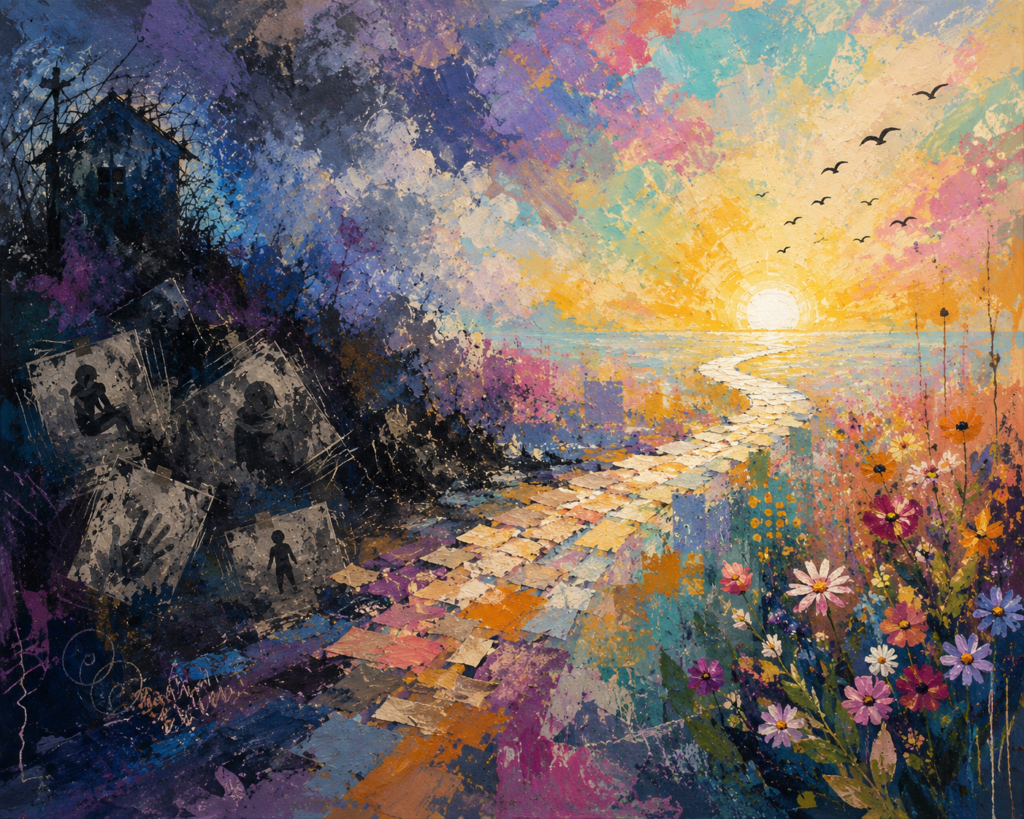
    Eventually, I started taking matters into my own hands. I made my money and made new good memories the first chance I got.

    Better past

    The moment I learnt I am not automatically blessed with good ones, neither memories nor people, I decided to find new people for my new and better past.

    I was born cursed, but I can bless myself too.

    When I embarked on my journey of owning my life, I was made to feel ashamed for those attempts. But I have tried to live because I have stopped trusting anyone else, especially time. I’m scared of giving that control to anyone now.

    I find my people and my resources. My time has to keep up with me. I will not let them disappoint me again.

    I only want to indulge in good and meaningful moments, making memories with only those who are worthy of it. I want to invest in memories for my old age.

    I want, in my final moments, when the movie of my life plays in my head, no matter how painful the start is, for my final memories to be full of love and warmth.

    I may be the weak child, but I shall not remain so.

  • Not a Mirror, But Water — The Opposite of Trauma is Safety

    To calm the chaos, the nervous system needs steadiness.

    It needs predictability.

    It needs someone who stays the same, like there is a tomorrow.

    Someone who is not conditionally there.
    Someone who does not leave because it becomes too difficult to stay with you.

    Someone who understands that being present matters more than being right.

    It needs someone whose presence does not constantly shift.
    Someone who does not make you toss a coin again and again.

    Someone like a parent, but what a parent could not be.

    Someone like God, except I treat Him the way I learned to treat my parents:

    with hesitation, with doubt, without complete trust.

    And yet this person stays.

    To prove me wrong.
    To build trust brick by brick.

    Trauma healing

    Trauma takes away the agency to choose.

    To choose what to feel.
    What to express.
    How much of yourself is safe enough to reveal.

    Safety brings expression back.

    It gives you the freedom to become who you truly are, no matter how messy that may look.

    Trauma is fast.
    Trauma is lightning.

    Safety is slow.
    Safety is the sun rising quietly until it becomes midday.

    Trauma feels like standing on a tiny, shaky wooden plank in the middle of an ocean with violent waves around you.

    You could fall any moment.

    Safety is childish.
    Safety feels magical to those who never had it.

    It feels like jumping into a puddle on the road, knowing you are going to get dirty, but also knowing it will be fun.

    You do not worry about falling.
    Nor do you worry about who will pick you back up.

    Because you can handle both.

    You own your body there.

    Trauma takes away that feeling of ownership.

    So I want someone solid as a rock.

    Not a mirror.

    More like water.

    So calm that I can finally see myself in it without hating what I see.

    And even when the ripples disturb the reflection, my flaws no longer scare me.

    When I cry, this person—this water—washes my tears away with softness.

    Even when I immerse myself in it, I do not get lost.

    It gently pushes me upward and leaves me on the shore of sanity when I am ready.

    Being safe feels like walking on the beach.

    You are no longer trying to survive the waves.

    You are finally able to listen to them.

  • My own words of wisdom- Running collection of some fleeting thoughts

    2.

    We learn by surrounding ourselves with people who are better than us. If we surround ourselves with those who lack understanding as compared to us, then we will have no inspiration to be better.

    It is not about who has more money or fame, who is stronger or smarter, but overall who has better values and skills in facing a certain type of situation.

    A child learn swimming faster by looking at people who know how to swim, as compared to those who are standing on the side.

    1.

    “Every day, it is a struggle to return to your thriving state when all you have managed to do is survive.

    Every time you struggle to keep yourself together, a part of you breaks.

    Why is all my strength used only to hold myself together?
    Why is the only mountain I am expected to move the one inside my mind, instead of the ones outside?

    Why can I not show my battle wounds to anyone and still feel like a winner, simply because my battle was with myself and not with an enemy the world could see?

    Every time life pushes me to my knees and I pull myself back up again, people only witness the version of me that fell.
    They never see the fighting.

    Why are all my battles fought alone?”

  • The Discomfort of Having a Friend

    I worry about having a friend.

    The discomfort of depending on them.
    The discomfort of relying on their presence to complete conversations you do not want to have alone.

    I can wait for years just to complete that conversation.

    The conversation waits within me.
    The grief holds itself carefully inside me.
    The pain stays safely stored in my heart, waiting for its release.

    Is my friend the place where I seek redemption?

    It started as nothing, and somehow became everything.

    In a world obsessed with defining love through the physical, this platonic crush became my holy grail for peace and fun.

    The urge to talk to them in the group while still remaining courteous.
    You cannot reveal that every conversation quietly seeks their emotional validation.

    The subchat.
    The side group.
    The secret extra details.
    The expressions you need to share with them before the day can end peacefully.

    I stay with the comma until I talk to them, and they become the period of peace.

    They turn the page for me.

    I did not know that my urge to add subtitles to every conversation was the kind of love I needed during this mundane life.

    Subtitles only they would understand.
    Subtitles you cannot say out loud, because others would notice.

    Love holds very little power when it comes to overly territorial friendships.

    You cannot cross that line.
    You cannot come between that bond.

    The closeness becomes territorial.
    Almost sacred.

    Where love sometimes comes with fragility, disturbed as easily as sand touched by waves, friendship feels carved in stone.

    Not a handmade carving, but something shaped slowly through time.

    Not just what waves do to underground rocks, but what a rope does to a stone wall after years of friction.

    Friendship endured what hurt the most.

    It saw your friend withering in pain, and still you stayed.

    It tests your stamina.
    Your appetite for love.
    Your ability to remain.

    Discomfort of a friend

    But sometimes, you have to cut this cord yourself.

    Untie this seemingly unbreakable knot with your own hands.

    To break a friendship, you have to break the stone.
    The very stone you carved your promises into.

    And while smashing it against the ground would be easier, you still want to be delicate about it.

    So instead, you break it on your own feet.

    While your friend cries, you bleed.

    But you still do it.

    Because staying hurts more.

    Yes, you will make new friends.

    But the piece of heart they took with them stays there forever.

    And eventually, you stop hoping to get it back too, because you would not know what to do with that piece even if it returned.

    Some memories are not erased.

    Only buried.

  • The Person I Post

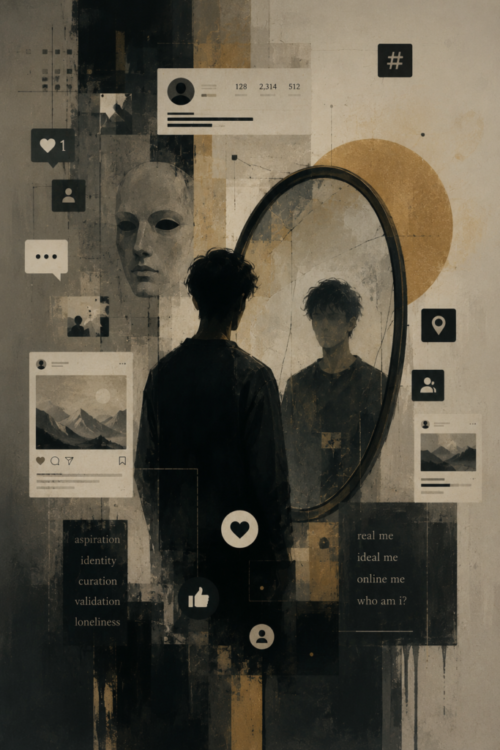
    The way we exist on social media is different from real life, or so I believe.

    Social media is not just an extension of our social personality. It is also an extension of our internal world.

    It has quietly become a part of our resume, our biodata, our social life.

    Without meeting you, I can already assess you, put you in a box, admire you, judge you, or completely character assassinate you based on your profile.

    I can see who you are friends with, who you follow, who you admire.

    Based on your shares and posts, I can guess your political inclinations, your ideals, your idols, your value system.

    I can also see whether you are a loner or socially desired.

    Whether your life looks curated or chaotic.

    Whether your taste feels refined or whether we may never align at all.

    The strange part is this:

    Without ever truly knowing a person, we can build an entire story about them.

    And that makes me wonder –

    Is social media really the right place to start knowing someone?

    Is it an extension of personality, a mirror, or an aspiration?

    Is it who people are?

    Or who they wish they were?

    Are we presenting ourselves the way makeup presents a face – enhanced, edited, softened, strategically lit?

    Or are we quietly catfishing each other emotionally through aesthetics, captions, and carefully selected vulnerability?

    I remember a time when social media felt like everything.

    If something was not posted, it almost felt like it never happened.

    It was about how you arrived.

    How your life looked.

    Your online presence sometimes mattered more than your real one.

    Social media and me

    And now I wonder –

    Is social media slowly making me live a delusional life?

    Is it making me more aspirational, or more disconnected from reality?

    More authentic, or more performative?

    More expressive, or more aware of being watched?

    Can social media ever give me the courage to fully endorse the actual weird version of myself?

    And harder still:

    Do I have the courage to admit that a part of me genuinely wants to live like the person I present online?

  • You Become What You Fight

    There are people who make something inside you tighten. Your jaw, your chest, your thoughts, your whole being for an instant!

    People who don’t just irritate you, but make you want to correct them, fix them, defeat them, hold a mirror up to their face, make a movie on their behavior and show it to them in an iMax theatre to tell them how it feels.

    We like to believe they are the problem. And sometimes they really are!

    But what if they are also the mirror, mirror of our inner world?

    Carl Jung spoke about the “hero’s path”. It’s the conscious choice to remain good, to resist becoming what one hates. A quiet resistance against internal and external corruption.

    Yes, you are the hero (or heroine).

    And these people, you may call them enemies, are creatures that make you clench your teeth. You wish to change them, or send them to Mars, with no between!

    But they serve a bigger purpose.

    We can’t appreciate light without dark, good without bad, and in the same way, we can’t fully know ourselves without the people we despise.

    They remind us what we do not want to be.

    Joseph Campbell, influenced by Jung, said every hero must confront their “Shadow”. They are the darker, suppressed parts of ourselves. The real victory is not destroying them, but integrating it without being consumed.

    Because sometimes, anger rises fast. It asks you to stoop, to match, to return the same energy.

    But pause – even for a moment – and you’ll see:

    Competing with them makes you more like them, and less like you.

    The reason you hate your enemies is because they have hurt you. And when you try to hurt them in the same way, you become the very thing you despise.

    This is not a sermon. This is just honesty.

    I don’t want to be like my enemy.

    I don’t want to carry the same traits as the person I dislike.

    I want to remain different.

    My enemy tests my moral meter. My belief system. My boundaries.

    The people I dislike show me how firm, or fragile, I really am.

    The values I despise do something strange: they reassure me when I am drifting.

    They force me to check myself.

    If you’ve seen Star Wars, George Lucas built its core on this. The constant pull between becoming the evil you fight, or choosing something higher.

    We’ll talk about forgiveness and acceptance another time.

    You become who you fight

    For now, sit with this:

    Our anger is a psychological mirror.

    At the core of the hero’s path is a difficult realization: 

    We are not just fighting them, we are resisting the part of us that could become them.

    It sounds dramatic.

    But even small unkind choices slowly build the courage to become someone harsher than we intended.

    To become as mean as my enemy.

    To be unkind to those who have meant no harm.

    To be selfish when others are giving freely, without asking.

    To hurt those already broken into a thousand pieces, just to mend my own wounded pride.

    To stand and watch while someone’s world burns, because I had no water to save my own.

    To turn as cold as Antarctica, because warmth would make me vulnerable.

    I am scared to become all of this, just to put my enemy down.

    So yes, I want to thank the people who frustrate me.

    They have made me think harder. They have forced me to question my beliefs. They have given me ground to stand on.

    Even disagreement has shaped my voice.

    There are many versions of truth, many value systems. But being challenged has made me look deeper, why I believe what I believe, and where I still need to grow.

    It has also shown me how small my thinking once was.

    I don’t want a world where everyone is like me. It’s not possible, and maybe not even desirable.

    So the only way I can exist meaningfully in this world is by choosing, again and again, not to become what I cannot respect.

    Not out of superiority. But out of awareness.

    And in the end, as Friedrich Nietzsche warned:

    “Beware that, when fighting monsters, you yourself do not become a monster. For when you gaze long into the abyss, the abyss gazes also into you.”

  • The Piano We Never Touched

    Most people don’t refuse new things because they are certain they won’t enjoy them. They refuse because trying requires a brief surrender of certainty, of control, of the version of themselves that already knows how to exist. 

    New experiences don’t just offer pleasure; they threaten familiarity. And familiarity, even when it’s limiting, often feels safer than the unknown.

    The more you hide, the more joy hides!

    What people often don’t understand when they refuse to try new things, or ridicule others for trying them, is that they are not rejecting an activity. They are rejecting a feeling. An experience. A possible doorway to joy.

    If someone has already tried something and genuinely disliked it, that’s different. But to decide in advance that nothing new can bring happiness and joy, that everything meaningful lies strictly within one’s comfort zone; that is not wisdom. 

    It is a quiet waste of life.

    How can you know you don’t like something unless you’ve felt it?

    Why experimenting is the key to knowing more

    I’m not talking about drugs or anything risky or harmful to health or society. I mean very basic things. Simple things. New food. A new sport. A different kind of book. A place you never imagined yourself in. Sometimes even a version of yourself you never thought you could be.

    Imagine if the only instrument you had ever known was a pair of tongs, and you believed that was all music could be. You made do. You accepted it. And then one day, you discovered a piano. You wouldn’t just hear new sounds, you would realise how limited your definition of music had been all along.

    This is true of food. Of art. Of movement. Of relationships. Of joy itself.

    Unless you have experienced something, how do you know what it might awaken in you? You might discover a part of yourself, a joy bone, you never knew existed.

    Trying new things

    It may not completely be your fault

    Sometimes, this resistance to trying new things is not arrogance. It is fear. For people struggling with mental health issues, change can feel unsafe. Predictability becomes survival. Newness threatens the fragile sense of control they have built. Avoidance, in such cases, is not a failure of character. It is a nervous system doing its best to cope.

    But there is another kind of resistance. One that comes not from active pain, but from old, unexamined trauma, now fossilized in the form of projection.

    What is not processed stays like a bone in your body

    This trauma is so old and so familiar that it no longer feels like trauma at all. It has calcified. It has turned into a habit, into fixations and rigidity. Into a personality that prides itself on being “practical” or “settled” or “realistic,” when in fact it has simply stopped being curious.

    That’s where the real question lies.

    Are you losing your curiosity?

    When someone does something you haven’t – do you feel intrigued, or irritated?

    Are you genuinely uninterested, or quietly grieving a life you never explored?

    Judgment, more often than we admit, is grief wearing moral clothing. Labels give us a sense of superiority, but they also protect us from looking at what we might be missing.

    Awareness ,of both the life you have lived and the life you haven’t, is what slowly brings curiosity back. And curiosity, when paired with safety, leads to joy. Not all at once. Not dramatically. But steadily.

    An orange waiting to be peeled

    As long as you keep peeling away the layers you’ve built around the possibility of joy, you will keep finding it, sometimes in places you never thought to look.

    After all, the unlived parts of life don’t disappear, they remain veiled. 

    They wait.

    Carpe diem, hooman!

  • The Handkerchief in the Pocket

    If you love someone and you don’t feel an urgency to take care of them, not dramatically, not performatively, but instinctively; then something is missing. 

    Either you are not truly in love, or you have already taken them for granted. Because love, at least in its living form, does not feel leisurely. It doesn’t say we’ll see. It doesn’t wait to be convenient. 

    Love carries a certain urgency, a quiet but persistent one, where you want to run, stretch yourself, bring the sky to the earth if that’s what it takes.

    The moment love turns into ‘meh’, something subtle has shifted. Not necessarily hatred or anger , just certainty. The certainty that this person is not going anywhere. And once that certainty settles in, the rush disappears. What’s the hurry anyway? They’ll manage. They always do. 

    And without realising it, love starts outsourcing care to time, habit, or the other person’s resilience.

    For me, love means having a very low threshold for the pain of the person you love. Their discomfort should not register as minor to you, even if it is objectively small. You should feel unsettled by it, moved by it, pulled towards it. Not because of guilt. Not because of duty. But because love rewires you that way. 

    Their pain enters your nervous system faster than logic does.

    You want to support them. You want to ease it. You want them okay, not later, not eventually, but now. That impulse doesn’t come from obligation. It comes from attachment, from care that hasn’t gone numb yet.

    And maybe that’s the real marker. Love isn’t grand gestures or lifelong promises. It’s the inability to stay indifferent. The discomfort you feel when the person you love is even slightly hurting , and the instinct to move towards them before the world teaches you that you don’t have to.

    Adding some of my thoughts through this poem written by me;

    अगर मेरे होने पर भी तुम्हें खुद को मुताबिक़ करना पड़े,

    तो वो इश्क़ ही क्या जिसमें तुम्हें शिकायत करना पड़े।

    यूँ तो मुझमें और तुममें बस एक ही फ़र्क है,

    तुमने आँसुओं को अपनी मोहब्बत का हमसफ़र माना,

    पर मैंने हँसी के सिवा तुम्हारे चेहरे पर

    कोई और तसव्वुर ही न जाना।

    लफ़्ज़ों के जाल, वादों के महल,

    ये सब मैंने कभी सीखे नहीं,

    झूठे ख्वाब किसी को

    जान-बूझकर कभी दिखाए नहीं।

    बात अगर रूठने तक ही आ रुके,

    तो जेब में रखा रुमाल

    महज़ नुमाइश के लिए नहीं।

    Handkerchief