
“He disliked emotion, not because he felt lightly, but because he felt deeply.”
John Buchan
And I’d like to inform Mr John Buchan, that this ‘he’ has stopped feeling/expressing emotions altogether henceforth.
Because feeling so much and not being able to do anything about it drove him mad.
And this brings me to my new thought, the motivation to change.
Why ‘change’ is difficult
There has been a lot of discussion on change, and there are countless resources that talk about how to create it, on social media, in the hospitals, in our spiritual books and from our discussions with our friends too. But seldom we are speaking about recognizing it.
The change I’m referring to is psychological, although the mindset and solutions for bringing about a change are not limited to this realm of life alone.
I’m trying to understand the step before action, the moment a person decides they need to do something about their situation. That ‘change’ now is inevitable!
How do people find their ‘why’?
I think we are willing to change only when the pain of staying the same becomes uncomfortable enough.
When life becomes unbearable to live as is!
The First Barrier: Admitting There Is Pain
Imagine you develop a physical ache, the only reason you bother resolving it typically is because it disrupts your daily routine. The more difficult your routine becomes, the more urgent the need to fix the pain feels.
We also take urgent actions on those pains, where we fear if we don’t take care of them right now, they will definitely will become too big to handle later. So, the fear drives our defences.
This is basic common sense.
But when the same thing happens in the psychological realm, this common sense, this fear of future pain disappears instantly.
Psychological pain is tied to our self-image and worth. When we suffer mentally, the first challenge is simply accepting that there is pain. And culturally, strong people live in pain while going through pain, perenially. That’s how they are admired.
Pointing out a pain without a smile, is considered something only ‘weak’ people do.
You see, our threshold for psychological pain is shaped by many things. It may seem like an individual choice, but it is actually influenced by society, culture, religion, education, morality, tradition, geography, and more.
What we should find painful, and even whether we are allowed to name something as pain, is often decided by others.
How We Lose Touch With Ourselves
A lot of research in child psychology encourages parents to focus more on guiding and emotionally regulating children rather than controlling them with rigid rules. We are asked to keep children curious and exploratory, rather than raising them with the fear of getting things wrong.
We are encouraged to teach them how to navigate life through action and consequence, not by forcing them to follow someone else’s blueprint.
This comes from the understanding that controlled and coerced children eventually develop a distance from their true selves.
Psychologically and spiritually, children are wise by default, we just need to give them the environment to reach their own obvious answers.
Just like a gardener weeding out anything unwanted, and providing the sapling the best environment to grow their natural true self.
For example, if my child doesn’t want to share today, I let him learn through experience. Eventually he will realise that not sharing limits friendship, and he will understand the value of sharing to build camaraderie. Humans naturally crave community, so children instinctively move toward behaviours that support connection, without being pushed into people-pleasing.
At the same time, if a child is naturally introverted and doesn’t want many friendships, they will also learn that for themselves. The point is: these things develop naturally when we allow them to.
But in most families and cultures, this curiosity, autonomy, and self-understanding gets suppressed. Children are told to bear their discomfort, to ignore their inner signals, and to “keep going” no matter what.
As adults, this turns into repression. And repression always has consequences.
The Repressed Adult
A repressed person becomes bitter, even if they hide it well. If they bury this bitterness under niceness and people-pleasing, they eventually develop health issues or simply lose the ability to enjoy life.
The distance from the self becomes so large that they stop seeing themselves at all.
These adults may:
- talk to themselves often
- feel spiritually intense or excessively social
- appear insecure or emotionally flat
- function on autopilot
- insist “nothing is wrong”
And they deny if anything is hurting them not because they are lying, but because they genuinely stopped feeling their emotions long ago.
Helping Someone Who Cannot See Their Pain
To help such a person, you first have to show them that their behaviour reflects inner turmoil. They will resist this, because their denial is decades old.
So you begin by normalising what they are experiencing. You show them that many people who behave this way are actually struggling inside. You remove the shame. You create safety through information and examples.
Only after repeated validation and awareness do they finally feel safe enough to seek help or open a deeper conversation.
But this is not a quick process.
It requires:
- a generation normalising emotional pain
- society validating the experience
- media and culture spreading awareness
- and a person feeling less alone in their struggle
The Shame That Blocks Change
The biggest barrier to psychological change is shame.
People are shamed for having mental health issues, so they keep their pain threshold dangerously high and live in denial.
It is normal to talk about knee pain due to lack of exercise than mental health issues, borne out of individual and family issues.
Society calls such people who talk about mental health weak, even though everyone is suffering as much as them, in some way or the other.
It’s like a whole village smoking cigarettes daily. One person develops cancer, and the rest shame him for it, when actually all of them are at risk. Some may even have undiagnosed cancer already.
This is our exact cultural situation:
We cannot accept we are in pain, yet we ridicule anyone who shows signs of pain.
The first task, then, is to recognise psychological pain early, long before it becomes a full-blown illness.
The Two Types of Psychological Pain
There are two major kinds of psychological pain:
1. The pain you feel when you cannot live as your authentic self.
This is the pain that should motivate change.
It is the discomfort of living a life that doesn’t belong to you.
2. The pain of transformation.
This is the pain of unlearning your old identity and embracing who you really are.
This pain is intense because:
- your past will resist
- your family and friends will resist
- even you will resist
Your nervous system prefers the old foe over the new friend.
It believes it can handle the familiar chaos better than the unfamiliar peace.
So deciding to change is cathartic, terrifying, and deeply uncomfortable.
And while crossing that inner bridge, you will often feel the urge to turn back.
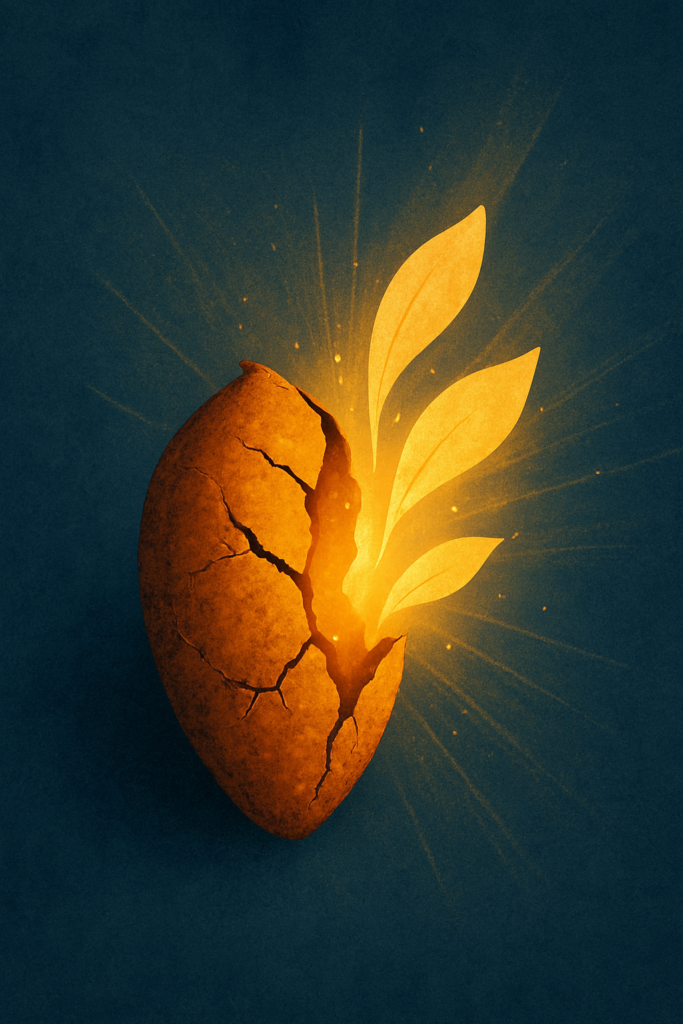
Choosing the Right Pain
The pain of change needs to be normalised.
It must be accepted as a healthy part of transformation.
The pain we should fear is not the pain of change, but the pain of living a life that isn’t ours.
We must choose the irritation of misalignment as the signal to move.
We must choose the discomfort of building a life that feels authentic.
We must choose resilience for the small, subtle shifts in behaviour, not just for grand achievements.
Because real change begins the moment you stop tolerating the pain of pretending.
In the end
Change does not begin with motivation or discipline. It begins when you finally stop negotiating with your pain. When the discomfort of living a life that isn’t yours starts speaking louder than the fear of the unknown, something shifts inside.
The nervous system may resist, memories may pull you back, and familiarity may feel safer than freedom, but pain, when listened to honestly, becomes information. It tells you where you have outgrown your life.
And at that point, change is no longer about becoming someone new; it is about returning to who you were always meant to be.


Leave a Reply