Our body is a product of adaptation. For millions of years, life has survived by responding to its environment. Every living organism receives information from the world around it and adapts in ways that improve its chances of survival.
That process didn’t stop with evolution. It continues within us every single day.
The language through which the world communicates with us is stimuli.
Everything we see, hear, smell, touch, remember, imagine, or experience becomes a stimulus. Our brain continuously receives these signals, interprets them, and decides how to respond.
Over time, repeated stimuli shape how our nervous system understands the world.
That’s how muscles become stronger.
That’s how fear is learned.
And that’s also how healing begins.
In many ways, our brain is constantly trying to answer one question: What kind of world am I living in?
It doesn’t answer that question through logic alone. It answers it through repeated experience.
If the stimuli it receives are chronic stress, criticism, poor sleep, uncertainty, loneliness, and conflict, it slowly learns that the world is unpredictable and unsafe. It becomes more vigilant, more protective, always preparing for the next threat.
If the stimuli begin to include movement, nourishing food, restorative sleep, supportive relationships, meaningful work, nature, and moments of safety, the brain doesn’t transform overnight.
But with repetition, it updates its expectations. It slowly begins to predict a different world.
Biology doesn’t judge.
It adapts.
Does that mean we’re helpless?
Not at all.
Many of the stimuli that shaped us were never our choice. We didn’t choose our childhood. We didn’t choose every painful experience, every loss, or every difficult circumstance.
But many of the stimuli we experience today are within our control. And when those begin to change consistently, biology follows.
Therapy introduces new emotional and relational experiences. Medication, when appropriate, can reduce overwhelming internal distress, creating enough space for the brain to learn differently. Exercise teaches the body strength instead of helplessness.
Time in nature, meaningful conversations, creativity, rest—each of these becomes another stimulus. Another piece of evidence the brain can use to update its understanding of the world.
Imagine someone who has spent years avoiding people because life repeatedly taught them that relationships lead to pain. That belief didn’t appear overnight. It was built through experience.
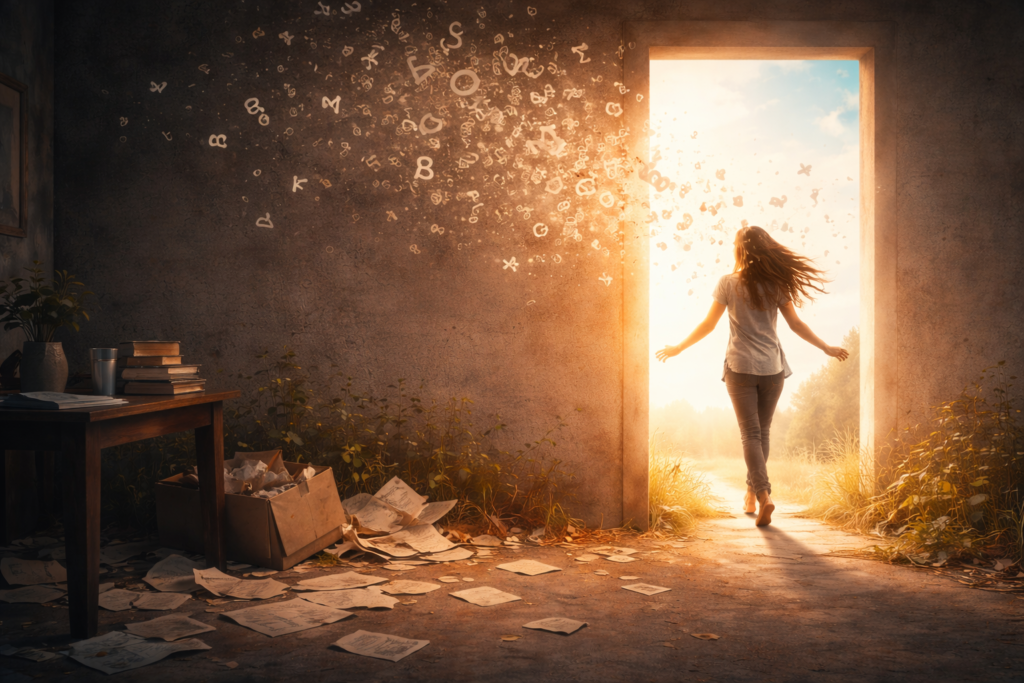
Healing doesn’t begin by forcing that person to trust everyone. It begins by introducing different experiences.
One safe conversation. One respectful friendship. One community where they feel accepted.
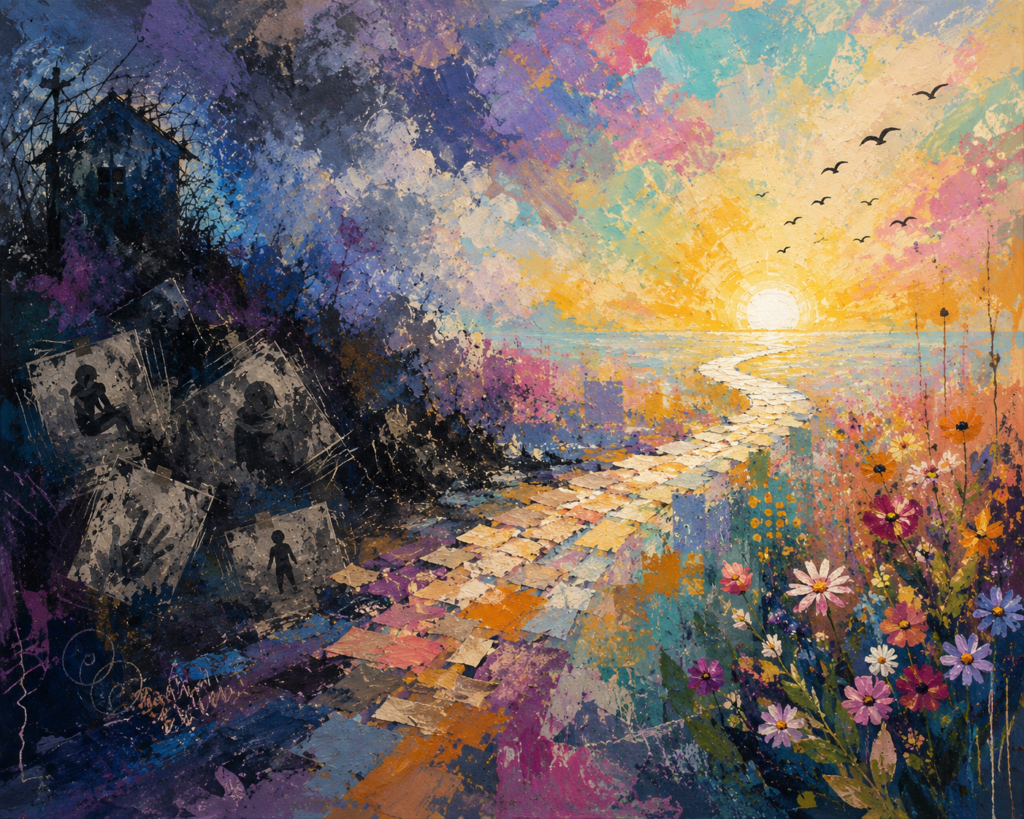
Those experiences don’t erase the past, but they offer the brain something equally important: contrast. And with enough contrast, new learning becomes possible.
The same is true in countless ordinary moments. You decide to go for a walk, which helps you sleep better. Better sleep gives you a little more energy. With that energy, you say yes to an invitation.
That invitation becomes laughter, sunlight, movement, conversation, and perhaps even a new friendship. None of these experiences changes your life on its own. But together, they create a completely different world of stimuli.
And your brain responds to that world just as it always has.

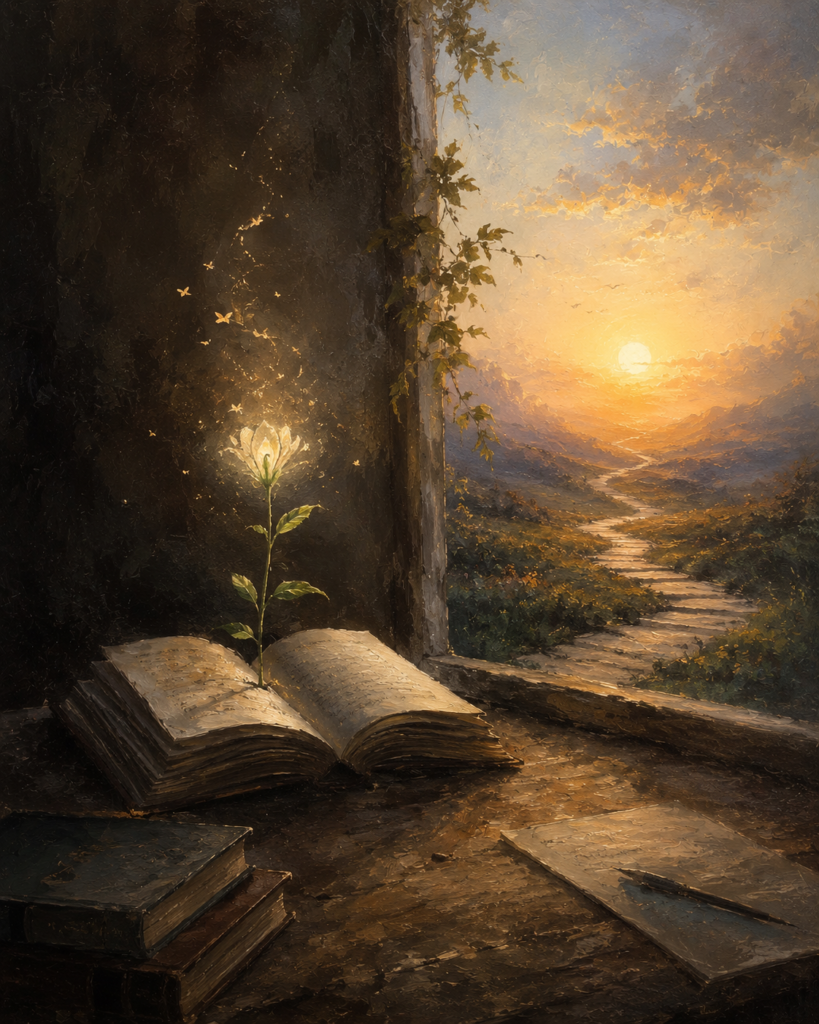
So if your brain is always listening, what story is your environment telling it?
Whenever you can, give your senses experiences worth learning from.
Give your eyes something beautiful to notice. Give your ears music they’ll remember. Give your body movement. Give your mind moments of stillness. Give your heart people it feels safe around.
Because repetition matters more than intensity.
Your nervous system is always taking notes.
Whenever you can, give it something worth remembering.