Category: R-Z

Essays starting with RSTUVWXYZ

  • Still Playing

    Before I delve into today’s super-serious topic, let me share some contemporary sayings:

    “Heaven probably has a multi-faith cafeteria.”

    “Coexistence is agreeing that everyone’s god has a different dress code.”

    “If God wanted only one religion, humans wouldn’t have been given opinions.”

    “God listens in all languages. Humans argue over subtitles.”

    “All paths lead to God. Humans added toll booths.”

    “Religious conflict is basically people fighting over whose metaphor is literal.”

    (Source: Internet)

    Haha? Not really.

    What if all religions are already coexisting?

    What if that one God gave us different endings because maybe there is no ending, only checkpoints?

    I haven’t played any video games in the last 15 years. I’m still stuck in the 90s millennial campaign mode, stage by stage, boss after boss, with an ultimate boss waiting at the end.

    And it makes me wonder:

    What if God is like the shop owner of a gaming store?

    You choose the game, aka religion, and He lets you. You jump in, jump out, switch games. No judgment. No restriction.

    What if there is no calibre required to play, only choice?

    The choice to remain in one game, call it reality, religion, universe, or birth, is between you and God. You remember this truth, except when you enter the game, you forget the arrangement.

    Just like you both intended.

    Does that amnesia make life, or religion, or the game, more engrossing?

    Does it help you play better? Learn deeper lessons?

    That’s something only veteran players and game gods might know. They might even share a few cheat codes.

    God can pull you out of the game whenever you want. You can also switch it off yourself.

    But God doesn’t, just because He can.

    Because the power of choice prevails.

    And come to think of it, why should God pull you out, no matter how much He sees you suffering, especially when you are also enjoying being in this mess!

    You paid for this game.

    This suffering.

    This life.

    Maybe through karma. Maybe through choice. It is what it is.

    It was always up to you, to leave the shop altogether or keep trying different games. Free shop you see!

    God holds no grudges.

    But can you handle the choices you’ve made?

    And what if I told you one big secret?

    The ultimate boss is God – the final choice giver -but the super boss in every game you play is actually an amalgamation of you.

    All your unhealed traits. All the harm you caused. All the versions of yourself you didn’t want to look at.

    A version that remembers how you hurt others, and how that hurt feels.

    A  dreadful version of you raised to the power of a hundred thousand.

    And you face this boss, not to punish yourself, but to make you learn what keeps returning. You need to be told what is stopping you from progressing.

    And still, the choice remains yours.

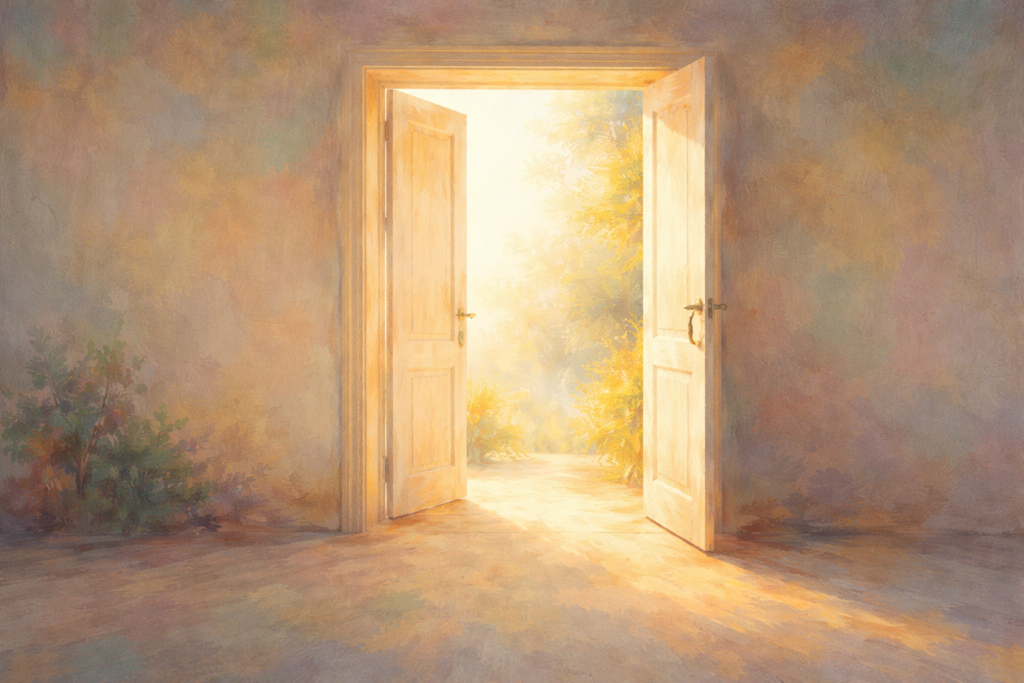
    Door to leave

    No matter how much we blame the game, no matter how much we behave like addicts, insisting the game won’t leave us, when in reality, we are the ones who can’t stop playing.

    Because it gives us a dopamine hit, an existential high!

    Could this be because we don’t know anything else?

    Because we haven’t experienced anything better, even while craving it for so long?

    We are unwilling to believe what some who had left told us about how freeing leaving the shop feels?

    And yet this is our ‘free will’!

    The only thing that might help is remembering the shop owner’s reminder:

    The shop is always open.

    The exit is too!

  • The Pain That Leads You Home

    “He disliked emotion, not because he felt lightly, but because he felt deeply.”

    John Buchan

    And I’d like to inform Mr John Buchan, that this ‘he’ has stopped feeling/expressing emotions altogether henceforth. 

    Because feeling so much and not being able to do anything about it drove him mad.

    And this brings me to my new thought, the motivation to change.

    Why ‘change’ is difficult

    There has been a lot of discussion on change, and there are countless resources that talk about how to create it, on social media, in the hospitals, in our spiritual books and from our discussions with our friends too. But seldom we are speaking about recognizing it.

    The change I’m referring to is psychological, although the mindset and solutions for bringing about a change are not limited to this realm of life alone.

    I’m trying to understand the step before action, the moment a person decides they need to do something about their situation. That ‘change’ now is inevitable!

    How do people find their ‘why’?

    I think we are willing to change only when the pain of staying the same becomes uncomfortable enough.

    When life becomes unbearable to live as is!

    The First Barrier: Admitting There Is Pain

    Imagine you develop a physical ache, the only reason you bother resolving it typically is because it disrupts your daily routine. The more difficult your routine becomes, the more urgent the need to fix the pain feels. 

    We also take urgent actions on those pains, where we fear if we don’t take care of them right now, they will definitely will become too big to handle later. So, the fear drives our defences.

    This is basic common sense. 

    But when the same thing happens in the psychological realm, this common sense, this fear of future pain disappears instantly.

    Psychological pain is tied to our self-image and worth. When we suffer mentally, the first challenge is simply accepting that there is pain. And culturally, strong people live in pain while going through pain, perenially. That’s how they are admired. 

    Pointing out a pain without a smile, is considered something only ‘weak’ people do.

    You see, our threshold for psychological pain is shaped by many things. It may seem like an individual choice, but it is actually influenced by society, culture, religion, education, morality, tradition, geography, and more.

    What we should find painful, and even whether we are allowed to name something as pain, is often decided by others.

    How We Lose Touch With Ourselves

    A lot of research in child psychology encourages parents to focus more on guiding and emotionally regulating children rather than controlling them with rigid rules. We are asked to keep children curious and exploratory, rather than raising them with the fear of getting things wrong.

    We are encouraged to teach them how to navigate life through action and consequence, not by forcing them to follow someone else’s blueprint.

    This comes from the understanding that controlled and coerced children eventually develop a distance from their true selves.

    Psychologically and spiritually, children are wise by default, we just need to give them the environment to reach their own obvious answers. 

    Just like a gardener weeding out anything unwanted, and providing the sapling the best environment to grow their  natural true self.

    For example, if my child doesn’t want to share today, I let him learn through experience. Eventually he will realise that not sharing limits friendship, and he will understand the value of sharing to build camaraderie. Humans naturally crave community, so children instinctively move toward behaviours that support connection, without being pushed into people-pleasing.

    At the same time, if a child is naturally introverted and doesn’t want many friendships, they will also learn that for themselves. The point is: these things develop naturally when we allow them to.

    But in most families and cultures, this curiosity, autonomy, and self-understanding gets suppressed. Children are told to bear their discomfort, to ignore their inner signals, and to “keep going” no matter what.

    As adults, this turns into repression. And repression always has consequences.

    The Repressed Adult

    A repressed person becomes bitter, even if they hide it well. If they bury this bitterness under niceness and people-pleasing, they eventually develop health issues or simply lose the ability to enjoy life.

    The distance from the self becomes so large that they stop seeing themselves at all.

    These adults may:

    • talk to themselves often
    • feel spiritually intense or excessively social
    • appear insecure or emotionally flat
    • function on autopilot
    • insist “nothing is wrong”

    And they deny if anything is hurting them not because they are lying, but because they genuinely stopped feeling their emotions long ago.

    Helping Someone Who Cannot See Their Pain

    To help such a person, you first have to show them that their behaviour reflects inner turmoil. They will resist this, because their denial is decades old.

    So you begin by normalising what they are experiencing. You show them that many people who behave this way are actually struggling inside. You remove the shame. You create safety through information and examples.

    Only after repeated validation and awareness do they finally feel safe enough to seek help or open a deeper conversation.

    But this is not a quick process.

    It requires:

    • a generation normalising emotional pain
    • society validating the experience
    • media and culture spreading awareness
    • and a person feeling less alone in their struggle

    The Shame That Blocks Change

    The biggest barrier to psychological change is shame.

    People are shamed for having mental health issues, so they keep their pain threshold dangerously high and live in denial.

    It is normal to talk about knee pain due to lack of exercise than mental health issues, borne out of individual and family issues.

    Society calls such people who talk about mental health weak, even though everyone is suffering as much as them, in some way or the other.

    It’s like a whole village smoking cigarettes daily. One person develops cancer, and the rest shame him for it, when actually all of them are at risk. Some may even have undiagnosed cancer already.

    This is our exact cultural situation:

    We cannot accept we are in pain, yet we ridicule anyone who shows signs of pain.

    The first task, then, is to recognise psychological pain early, long before it becomes a full-blown illness.

    The Two Types of Psychological Pain

    There are two major kinds of psychological pain:

    1. The pain you feel when you cannot live as your authentic self.

    This is the pain that should motivate change.

    It is the discomfort of living a life that doesn’t belong to you.

    2. The pain of transformation.

    This is the pain of unlearning your old identity and embracing who you really are.

    This pain is intense because:

    • your past will resist
    • your family and friends will resist
    • even you will resist

    Your nervous system prefers the old foe over the new friend.

    It believes it can handle the familiar chaos better than the unfamiliar peace.

    So deciding to change is cathartic, terrifying, and deeply uncomfortable.

    And while crossing that inner bridge, you will often feel the urge to turn back.

    The pain that leads you home

    Choosing the Right Pain

    The pain of change needs to be normalised.

    It must be accepted as a healthy part of transformation.

    The pain we should fear is not the pain of change, but the pain of living a life that isn’t ours.

    We must choose the irritation of misalignment as the signal to move.

    We must choose the discomfort of building a life that feels authentic.

    We must choose resilience for the small, subtle shifts in behaviour, not just for grand achievements.

    Because real change begins the moment you stop tolerating the pain of pretending.

    In the end

    Change does not begin with motivation or discipline. It begins when you finally stop negotiating with your pain. When the discomfort of living a life that isn’t yours starts speaking louder than the fear of the unknown, something shifts inside. 

    The nervous system may resist, memories may pull you back, and familiarity may feel safer than freedom, but pain, when listened to honestly, becomes information. It tells you where you have outgrown your life. 

    And at that point, change is no longer about becoming someone new; it is about returning to who you were always meant to be.


  • The Warm Wisdom Of The Wounded

    When Healing Meets the World Again

    There comes a moment in every healing journey when you must return to life; not as the person who broke down, but as the person who survived.

    After a long period of healing when you try to get back into society (family, friends, community, work, anything which involves people), a lot of things which seem normal to an ordinary individual, would seem alien like to a healing soul.

    Re-entering society can feel strangely delicate.

    The Strange Fragility of Re-Entry

    Simple interactions suddenly require courage. Ordinary days feel like new terrain.
    It’s a quiet truth of healing that once you change internally, the external world must be learned all over again.

    For healthy/not deeply traumatised people, just attending an event is an everyday part of life. Meeting, interacting like “a socially fluent human being” is part of their daily grind.

    The Memory of Who You Were

    There is one very interesting thing about healing. If you have healed a bit, somewhere you are willing to give humanity and yourself a chance again, and then you remember you still are the same person who went through the dark tunnel, just to see the light today.

    A healthy individual likes to live, being around life, in general. Hence, even the slightest healing nudges you towards forming your community again.

    Learning to Live Life Again

    For a mending brain who is learning to be human again, all these efforts of becoming a part of the community, sometimes may seem like running a sprint.

    They know they’d probably finish it but would they feel competent rather than exposed?
    Would it further tarnish their confidence?

    And even if they do win, would they be willing to run again?
    Would they be willing to put up so much effort again?
    Would they find the struggle worth their mental energy?

    No one can answer it until it happens.

    Broken people trying to mend their wounds have been told to keep trying, to stumble, to fall and get up again, at their own pace, just like a child learning to walk. They have to learn how to participate in life for the first time, after a long time.

    But how hard that process is, only the person going through it, or the one who has survived it truly knows.

    And yet, healing has its quiet miracles. Something in it keeps pulling you forward, urging you to try again, to reach again, to believe that life can still soften around you.

    When the Mirror Feels Heavy

    When trauma runs deep, it doesn’t just change how you feel, it changes how you see yourself standing in the world. It makes you shrink from your own reflection. It makes the body feel unfamiliar, undeserving.

    And because trauma often pushes you out of the community and into isolation, that physical self-doubt grows stronger. You start overthinking how you look, how you appear, how you are perceived.

    Every small gesture feels loaded, every silence feels like rejection.

    And when healing finally asks you to step back into society as your true self, it feels like stepping out without armour. It becomes one of the hardest parts of recovery, trying to feel like a “normal person” again, when nothing inside you has felt normal for years.

    What Trauma Leaves Behind

    Trauma brings out the beast in some and saint in another. Trauma can harden some, soften others, and leave some in between. It fractures people differently. And probably the one of the most remarkable qualities of being human is adaptability.

    If you have healed right, with no more grudges towards the world and the self, you retain the good qualities and also the ones which are required for this big bad world.

    But one thing about healing is, it is never linear. Even the strongest, most self-aware person will slip into old patterns sometimes. But slipping is not failing, it’s part of the recalibration.

    Each return to old wounds teaches you something new about your strength. And once you know how to navigate these slip-ups with grace, you naturally become someone who can steady others when they feel themselves falling.

    The Strength Hidden in Old Wounds

    There are many strengths asociated with healing, if done right. If the trauma taught you to be assertive for self protection (in fight mode), stand up for yourself, then now it’s just a superpower waiting to be used, whenever needed.

    You just need to switch it on, wield that hidden sword whenever you want. You see some wrong doing, you know you have the power and the assertive energy to stand up for anyone, only now you are intentional about it.

    The gear is manual now, you are not on autopilot mode anymore.

    When Kindness Becomes a Choice

    If your trauma tilted you toward fawning, a people pleaser, you will always know what hurts others. Being nice becomes a choice, not a necessity. You become kind and nice because you know the world is very harsh and you don’t want to hurt another traumatised soul.

    Some unhealed souls may call you a “doormat,” but you know it’s a choice. Healing teaches you when to step forward with warmth and when to step back with boundaries. Even your niceness becomes a form of strength, something you offer intentionally, not out of fear, but to bring a little healing into a harsh world.

    You want people who need some warmth and need some unsolicited kindness to get it from you.

    To me healed traumatised people make the world kinder.

    God only knows how much unsolicited kindness has healed the world!

    Hypervigilance – Reimagined as Wisdom

    And then you meet a hypervigilant, anxious person, who always thought we are all gonna die tomorrow because of the apocalypse or an earthquake or climate change or a bomb blast, or a fire accident. This person in their healing phase becomes an impeccable planner and risk assessor. They by choice tell people of any pitfalls that they are ignoring, in whatver domain they are able to assess risk.

    The erstwhile hypervigilant self, still notices things but knows how to use that information for benefiting others rather than going in a spiral alone.

    Why Healed People Make Empathetic Leaders

    People who survived chaos can become remarkable leaders. Their insight and resilience make them uniquely capable.
    People who lived through hypervigilance often excel at risk assessment.
    People who fawn often become excellent nurturers and relationship builders.

    Unprocessed trauma can distort a person’s relationship with power.
    But the same person with healed trauma has knowledge of empathy and boundaries, and other important aspects required for becoming a great leader.

    You see the good thing about trauma is if you are truly healed, you operate as a happier version of yourself, yet the teachings remain. You still remain the empathetic version that you truly needed.

    Does this mean everyone should go through deep trauma?
    Does this mean the heroes of your society the leaders should be those who have gone through traumatic events and healed?

    A good topic for research it seems!

    The Danger of Unhealed Power

    Unhealed people could be a menace for sure in leadership positions. We have many examples of such people, especially in political scenarios. The ability to watch the world burn but still be okay with it, is classic unhealed inner child behavior.

    Often, unprocessed childhood wounds manifest in adulthood as emotional volatility or disconnected empathy.

    It raises an important question: should emotional maturity be a prerequisite for leadership, just as education and experience are?

    Because more than anything, I would suggest the leaders we choose to go through a psychological analysis to understand how deep a trauma they have, and will it make them do cruel things to their citizens, without any accountability.

    Leaning On Those Who Have Done the Work

    Now, to expect we have absolutely unbroken people in this world is impossible. But we can lean on people who have learnt to heal. For one, they believe in changing for good, they are self aware, they are adaptable. They know what it means to be broken, yet they believe in living a good life and they know why it is important to heal for living that life.

    The Choice That Changes Everything

    Until we reach the stage, where all are happy and resilient, I would use the superpowers of those who have chosen peace over war any day.

    The power rests in choice, the choice to become a better human everyday.

  • The Heart That Keeps Remembering

    One of the most interesting things about humans is how much we like being emotional, reliving feelings and memories.

    We can’t generalize that we all want to relive the same emotions, but yes we are addicted to emotions and feelings.

    Some of us crave the dopamine rush, maybe that’s why sports, races, and gambling attract so many. Some of us seek calm through meditation, sound healing, or quiet reflection. Some are looking for that oxytocin popping in us through those cozy loving memories and places.

    Some feel alive at a music concert. The thrill of seeing your favorite artist, your idol, the shared energy of thousands feeling the same emotion. Jumping from a cliff and adventure sports are known to make you feel alive again. And that, too, is a kind of high.

    Then there are those who want to relive even deeper emotions.

    We miss the old days. We want to feel those softer moments again. You find yourself watching a movie you once saw with someone special. You listen to the same playlist from your favorite vacation. The same songs you danced to with your friends a decade ago. You feel joy in your heart visiting a place where you vacationed with your friends once.

    A trip so good you can’t remember anything except for the happiness it brought.

    You attend a marriage ceremony, and the rituals remind you of your own. You lovingly think about your partner again, you feel grateful to be here with them. You smile for the newly married couple in front of you, and you smile for the newly married couple you once were.

    Later, you walk through a park and see a little girl sitting in her mother’s lap. Instantly, you think of your own daughter when she was that young. The child now standing tall beside you becomes, for a moment, that same little one curled in your arms again.

    You pick up a book your parents once read, and somehow, you can almost feel their presence in its pages.You can smell them and can feel their fingers on those pages. You listen to the same morning bhajan because it reminds you of home.

    You are driving your car and suddenly the radio plays your mom’s favorite song. Mom doesn’t live here anymore, but she stays in that song somehow for you. You neither can pause the song because your hands have frozen, nor want to pause because at that moment, she’s here again. 

    You feel so much yet you feel nothing. At that moment the world stops. 

    You are breathing but living in the past.

    And sometimes, you attend a condolence meeting. You feel that ache, the unbearable weight of loss , the one you thought you had already lived through. You never wished to live it again. You had shoved the memories of that phase somewhere deep within you.

    Yet here you are, reliving the passing of someone you still adore and your heart tears open again.

    You bleed tears once more, perhaps the ones that never fully fell back then.

    You come across a movie where someone important dies. You know what’s coming , but you don’t stop watching. You want to feel that burn again, the knots in your stomach, the lump in your throat. You let your face fill with tears, your breath quicken , as if dying again in that same moment.

    Why do we do this? Why do we like reliving these deep moments again and again?

    Maybe because, when we feel those emotions again, we become whole again. The heart, mind, and memory fall back into rhythm; everything that once fractured quietly aligns.

    Psychologists call this emotional coherence. It is when your thoughts, feelings, and memories finally make sense together. When the pain connects you back to who you once were.

    So perhaps we don’t chase the sadness or nostalgia itself. We chase the coherence; that fleeting feeling when everything inside us speaks the same language.

    You hear someone speak of heartbreak, and suddenly you’re back in your own story of one-sided love. They talk about hopelessness, and you remember your endless wait. The prayers, the astrological predictions, the blacked-out hope, the shrine you visited for a wish that never came true.

    Years later, you may thank God that it didn’t, at the same shrine. Yet, you don’t regret the feeling because those emotions made you who you are.

    Can we really undo what we have felt so deeply?

    Can I move on from the house I grew up in? Can I truly leave behind the school where I spent a decade? Will the old ice-cream shop from my dating days ever stop reminding me of the love I once felt?

    And do I even want to forget?

    Don’t I know that I still live there, just as I live here now? It doesn’t mean I’m stuck in the past, it means I still miss feeling.

    Can the heart ever truly turn to stone, or are we just covering it like ash covering a burning coal?

  • The Opposite of Pain

    We often think the opposite of pain is happiness. But what if it’s not? Is it the ability to get bored easily?  What if the true opposite of pain is indifference, powering through, the inability to get overwhemled easily? 

    People in perennial pain (because of a traumatic/difficult life), when a good thing happens they become numb. They are so used to pain chemicals that good things don’t make their system jump.

    They are shocked! What is this new chemical? All they know is that, this isn’t their usual friend pain. Hence, they are unable to process or express or experience their happiness as expected.

    People who can experience happiness in its realest form are probably happy in general, healed in general. Pain is not normal to them, or let’s say it’s just one of the difficult feelings like anger, disappointment.

    In fact, pain and disappointments don’t affect their system as much as they affect traumatised people. 

    Healed or unbroken happy people with sufficient emotional resilience can find happiness in anything and probably everywhere,everyday. They are those people who say they find happiness in small things.They are excited for anything and probably everything.

    People with pain as their sidekick are the opposite. Even the grandest events make them feel ‘meh!’. They are unable to feel happy when what they desired for long happens, because of their otherwise chaotic life and nervous system.

    They were not born like that, but today they have become like that.

    Their nervous system is not normally attuned to safety and happiness, therefore, when it actually happens, they don’t know how to process it.

    They are probably those people who are picking fights on the grand event day, because chaos is familiar, peace is not.

    Happy people are able to calm down faster and do not get easily triggered. Even if they get triggered, their reaction is not as loud as people in pain, who are easily overwhelmed with minutest of things.

    People in pain, they may or may not show it, but they are always looking for something to sulk about, that’s what their brain understands. Maybe this is how their brain is protecting them, making difficulties predictable.

    The boredom that comes with a safe life is unbearable to people with pain. Unless they recognize it and do something to fix it, this is who they become, party-poopers and crybabies.

    Pour some pain on me!

    Life is full of difficult choices. Be it childhood or old age. Every age has its own set of problems and priorities. The key is to learn how to make healthy choices. And even if we do make mistakes, how to bounce back from them, not dwelling in them forever.

    Nobody can promise a difficulty free, mistake free life.That’s not just how life works. But we can surely learn tricks to help ourselves and stand again after falling down, again and again.

    Healing all the more becomes pertinent, because broken people look for a particular type of pain every time.

    Everyone has a fixed drug in the form of pain, they would like to consume.

    Some look for betrayal in everything, some are fixated with moral and ethical flaws. Some want to prove in their mind that every one is selfish, and some want life to prove that they will be abandoned.

    For some, scarcity of money is always an issue. To some scarcity of love. The other is looking for scarcity of trust and inability to delegate. Some are unable to treat themselves as an individual and are waiting for others to look out for them. 

    Some people have made every relationship in their life someone else’s responsibility.

    To some, life owes them everything. They think it is life’s job to offer them peace, happiness and health without having to work for it. 

    Some believe respect is not given at birth, but earned, even love, even as a child.

    The list goes on.

    The point is, as a person who is able to feel more than others and more frequently than others, the chances are it’s not going to change, at least not on its own.

    If you think one day you will find your utopia, or the reason you are not finding your utopia is your bad luck or somebody’s fault, then this is the mirage you are chasing and living.

    This balloon will not pop on its own! You have to pop it or let it go in the air with your own bare hands!

    How to take this pain out of your system

    To understand what life is, it is what we make it, how it looks, how it feels, everyday!

    These are not just bumper stickers or words to be found in quote books, but it’s underneath the choices we make everyday.

    Everytime you choose not to help someone, because you were betrayed by someone, you are writing a story of kindness and transactional relationships.

    Every time you turn down meeting a friend, it is your choice of isolation. Every time you skip family dinner plans because you think it’s not worth it, only for a lazy reason or to look cool, it’s your choice to put your family away.

    Every time you put off a self care activity, this is the story of how your overall self worth would look like.

    Every time you give up a work opportunity, it’s your choice of employment. Every wellness meeting you are missing, it’s your choice of maintaining your health.

    The point is life is happening, around us and to us all the time. 

    To think we get life exactly how we assume, is ignorance. Life is built through things, and to think we can control the choices is ignorance.

    There is always an opportunity cost that you are paying. It is not about accepting anything and everything, it’s about being aware of what you are losing in the process. 

    It is not about right or wrong, it is how you want to achieve something.

    A house is made brick by brick, it’s not there readymade, nor it should be. It’s better to design your life like you’d love to design your favourite dress (men included).

    The point is not who is better or who is worse, the one in pain or one who is happy. It means, we shouldn’t think our personalities are natural and fixed, when it comes to it. 

    Our personalities are most likely conditioned and acquired. It is how the brain learnt to protect itself, how can we complain about it? 

    But, now that you are aware of it, and if you at all want to feel better, not saying you are not used to the pain, then give a chance to healing. 

    Make pain a foe in life, not a friend. Don’t get used to being in pain so much that you stop having problems with it.

    There is a better life, right inside you, waiting to happen!

    Choosing to be happy or be in pain is a powerful part of free will and being human, which other species don’t have.

    Don’t let anyone else take the reins of your life.

    So whatever you choose today, choose wisely!

  • When Life Feels Like a Panic Room

    Behold this image!

    A surgeon after performing a 10 hour surgery, comes out of the operation theatre. He takes a sigh. Things are still critical. But he doesn’t give these expressions when he is in the operation theatre, where everyone is looking at him for his work and prowess.

    He also doesn’t show his pauses in front of the patient’s relatives. He does it when the people who look up to him, can’t see him.

    He doesn’t want them to shake their confidence in him.

    He probably wouldn’t even have felt like sighing when he was in the operation theatre itself. The pressure wouldn’t have let him relax or take a short break just to realign himself at all.

    So, in the same way, you don’t sigh inside the very room where the problem lives.

    Imagine there is a heavy discussion or argument going on, you are sort of the neutral person or the unsaid umpire of the situation. You are swept up in all the heavy emotions in the room that demand your 100% attention.

    But it doesn’t mean your nervous system isn’t asking for a break. We need time to realign, process and ruminate our thoughts. That small sigh is an example of a short yet significant break.

    When we are in the room with the red light on, we may not want to tell people that there is something critical going on, through our expressions.Lest, they might get nervous and tense even more.

    We may foresee bigger trouble ahead, but we hold the calm of the room intact before dropping the weight of heavy information.

    And sometimes the situation is so urgent, you can’t imagine anything else, but to remain present in that situation.

    But something happens when you step out of your frame of reference. Something changes significantly, even for a second.
    Something which was mentioned by Daniel Kahneman, in ‘thinking fast and slow’. The moment our frame changes, mostly it’s the panic room itself, we suddenly become aware of the heaviness.

    There is heavy weight on our shoulders but we also feel we can put it down, for a bit. Before we could find the courage to put it back up again.

    Maybe that’s how being in a tough phase and getting through it feels.

    When we are in it, we can’t catch a breath. We are so deep in it, we can’t think of anything else in the world. It makes us panic and lose our strength, bringing us to our wits’ end.

    But is there something which can temporarily fix this frame, just like stepping out of the panic room?

    I think those transient breaks are people/friends/family. It could be a hobby, it’s a vacation. Sometimes work too!

    It could be a book or a movie or a night of standup comedy!

    Something or anything which lets you dissociate and detach from the imminent problem, for a bit. Something which gives you a chance to feel yourself, process the situation and your emotions about it.

    This change is pertinent for your emotional resilience. Yes, we are built to last. But we are not built without pit stops.

    When life feels like a Panic room, you need a break. #thoughtsdenbyneha

    We need to recharge. Maybe the capacity of everyone is different.

    We still haven’t been able to make a perpetual machine, let alone a human body!

    Do not hesitate to catch your breath. When going gets really tough, step out of your room.

    Yes, you have to step into it again, eventually, but recharging before going in, might give you a fresh set of perspectives and energy to solve the situation in the room again.

    What is life, if not a vast healthcare center!

    At any given time, some room is always blinking, asking for help?

  • Roots Before Wings – Pillars of Parenting

    Kids don’t become healthy adults naturally. Kids raised in a healthy way even by unhealthy parents become healthy adults. Healthy parents without proper guidance will raise unhealthy kids. More than intention, strategy to raise a child in a healthy age appropriate manner matters more.

    Some pointers on how to raise young kids (based on personal experience, discussions with fellow parents and reading)

    1. Kids are as obsessed with their parents as adults are with their crushes. A kid’s life revolves around parents 100%. They want to love them yet be angry at them, with the belief that they will never be abandoned, even for a second.
    2. Their relationship with parents is like a boomerang. No matter how far they go, how many people they mingle with, they come back to their parents, physically and emotionally.
    3. Parents are not only guardians but calibrators, co-regulators, neutralizers of negative things/emotions, punching bags, a cushion, a compass, and the people kids mirror the most. Literally, everything in life they learn and then sometimes unlearn on the basis of how their parents brought them up.
    4. Parents have to understand, their calm is their kid’s calm. Kids don’t understand love, peace, and calmness by default. They learn it through their parents. They also learn how to express their emotions, dark and peaceful both, through them.
    5. Kids learn to work with emotions through their parents. Kids have all emotions just like adults, minus the logic. The way you deal with your difficult emotions, is how they would learn to deal with theirs.
    6. Kids mirror the social dynamics parents follow. Also their body language, grooming level, their routine, their understanding of the social world, financial habits, everything. Including kindness and cruelty.
    7. Kids don’t understand action and reaction. They only understand attention and mirroring.
    8. They will repeat any behaviour if it gets them attention, positive or negative.
    9. Kids subconsciously mirror whatever parents do. So no matter what they say, they actually copy their whole behavior. Empty words don’t work on kids. If you don’t like something in your child’s behavior, it is most likely from the parents, or the people they usually hang out with.
    10. There are three times in a day when (young) kids crave parental bonding.
      First, when they wake up.
      Second, when they come back from school or after spending a few hours away from their parents.
      Third, before sleeping.
      On all these occasions, kids want their parents, at least one of them. Especially a calm and loving parent who gives them tons of attention. This is the time they crave love and want the parent to baby them, cuddle them, and show them how much they are loved and treasured. They share their stories and inner world during these times. This is the time to fill their cup.
    11. Kids love routine. They love predictability. Doing similar things every day at a similar time keeps them calm. Any change in this including location overstimulates and disturbs them, hence they throw tantrums.
    12. Kids don’t understand logic; they understand emotions.
    13. Kids are always reading their parents’ actions and body language. They observe how they talk about the world and themselves and how they treat others and themselves too. That is the script they are going to follow for themselves and in their relationships. So, if you think your child is grumpy, observe whether you yourself are grumpy or not.
    14. Kids don’t like over attention. All kids are shy by nature, meaning they don’t like unwanted attention. They choose whose attention they like and mostly they are caregivers, family and friends. Exposing them to camera for the public, forcing them to perform in front of others, exposing their personal lives in front of others and putting them on a stage without understanding their hesitation can damage their self esteem and push them either to become a rebel or an extreme attention seeker or in perennial need of validation. Kids don’t enjoy being on the stage before a certain age. They like doing things at their own pace.
    15. Do not teach your child they need to be famous and powerful to be happy. They don’t have to do anything to look cool. They should always learn to be their authentic selves.
    16. Please don’t raise obedient children. Raise children who can ask you questions and can give you their consent. Don’t raise a pushover nor a bully. Hence, don’t force them to do anything nor bully them.
    17. Everything that adults do in their life, from the basic stuff like greeting people, waiting, table manners, hygiene, kindness everything is a skill to be learnt by the child. Most of the learning they do by observing. That is why Mowgli couldn’t have accommodated in normal civil society because he was raised under jungle that also wolf rules. So, expecting a child to know these automatically and before a certain age is a wrong expectation.
    18. Teaching any skill to a child is like healing a fractured bone. It would heal in any way, rejoining at any angle, if not set by a plaster, hurting one for life long. But with proper intervention, it becomes as good as new. So any skill in any realm of life, needs to be taught by adults at their kid’ pace, not theirs. Without adequate guidance, a child won’t be able to learn any skill properly and will struggle later as an adult, thinking this is how he is naturally.
    19. Rushing/pressurising/leaving them alone to learn are inappropriate ways to teach any skill. This only increases anxiety, procrastination, perfectionist complex, risk aversion in kids. Kids are not animals, the only thing kids know by default are the basic human-animal needs like hunger, sleep etc. But without guidance they wouldn’t learn how to fulfill them either. If you don’t teach them, they will eat anything to fill their tummy. They need to be helped with what healthy food looks like, understanding hunger and sleep routine etc.
    20. Healthier and safer the kids feel around parents, naughtier and goofier they would be around them.
    21. The more proper and adult-like kids behave, the more their natural feelings are suppressed.
    22. It doesn’t mean kids shouldn’t be nudged when they do something inappropriate. Teaching should come from a place of maturity and calmness, not embarrassment, competition, validation and ego.
    23. A tantrum is a call for attention, not a time to teach/preach.
    24. A good kid or a bad kid, any extreme reeks of a problem with child psychology. Young kids are supposed to be naughty, pushing boundaries, experimenting with their physical limits, and trying to control situations like adults. That is normal during growing up. As a parent to assume, a young child would automatically become a nice person who does everything you ask them to do, which means the child might become a people pleaser, they are repressing their feelings to appease you. Our job is to guide them and provide them healthy boundaries among which they can exercise their autonomy. Kids expect boundaries from us, they want to see how far they are allowed to push in this world.
    25. Kids are always trying to understand their place in the world.
    26. A bad kid per say is a call for attention. Parents couldn’t create a healthy attention dynamic, hence, the child believed through reckless behavior they will get attention from their parents. It is not the kid’s fault, but the caregivers who did not notice them or nourish them in the right way.
    27. Parents need to show their kids they always love them but won’t agree to their wishes all the time. Life is unfair, not at home, but it is. Patience and perseverance are very important skills.
    28. Kids shouldn’t be praised for their physical beauty, nor should anyone be in front of them. Not in the sense that they feel inadequate about themselves, or judge others in the same way. They shouldn’t be made to feel their body is lacking in any way, be it size or color. Teach them, world shouldn’t revolve around physical features but it is our actions and behavior that matter more.
    29. Every one on this earth is born beautiful. It’s not up for debate. If you think we need to be a certain way to be considered beautiful and to get love, acceptance and praise, then first we need to work on our self esteem, conditioning and projection issues. Please lie to your child that you think they are very beautiful, you like them exactly as they are and so is the case with every kid, and work on your mindset meanwhile. Grooming doesn’t define how beautiful one is.
    30. Teach them, it is not necessary that one will like them or praise them, and that’s okay. If you feel uncomfortable with something done by someone, either ask or just do something else. Don’t make it about yourself, it never is. Your kid is the best person to be with always, and it’s a loss of someone else if someone doesn’t want to include them in any activity. Teach them not to dwell on the events where others make us feel bad. We will find more people in this big world who treat us better. It’s important to validate their sadness during such events and teach them to sit with difficult feelings too, rather than escaping them.
    31. Encourage them not to do mind reading of others, especially people who are not close to them. If someone wants to tell them something, they should tell them. So, never give them silent treatment, with the hope they would figure it out. They can sense the tension, but not the reason. It creates pressure on their fragile nervous system. This behavior of trying to learn to sense emotions of others, will make them people pleaser and snubbing their emotions to appease others.
    32. Do not put caretaking adult responsibilities on them. They do it out of fun, and to feel good about themselves is another thing, but don’t make it their responsibility. There is an age to treat them like adults, teach it to them then.
    33. Praise them to be kind and thoughtful, instead of wise and pretty.
    34. Parents shouldn’t hit or yell. Remember- louder the kid, the calmer the parent should be.
    35. When in doubt, hug. Work on a special handshake, for just you and your kid.
    36. Tell your kid they are your favourite person, you miss them, and you love spending time with them.
    37. Have at least one dedicated hour with them. Do any activity just with them. It fills their cup. Make it a routine.
    38. Do not snub a child when they are pushing their physical limits like jumping or climbing. Instead encourage them to be safe by rechecking their strategy, be there with them to protect but don’t stop them unless it’s too risky. This will build their confidence. Let them do house chores. Be there to guide, over protection will only make them wary of even trying. This is not about chores but teaching them to trust their instincts, developing their curiosity bone, building confidence and risk appetite.
    39. Kids who are helicopter parented, overprotected in daily life, asked not to jump or do risky physical moves, grow up to be timid typically. The more decisions you make for them, the more dependent they become on you. There’s a fine balance between being a parent and a guide that you have to maintain.
    40. If you have more than one kid, treat them equally, express your love similarly, no matter their age.
    41. Always keep your promises.
    42. Thank them and apologise to them, always.
    43. Praise them regularly, for their actions and efforts specially, directly and among your family.
    44. Show them you respect them.
    45. Never tell them you’ll leave them or push them out of the house or into a room alone when they are upset. This brings distance and makes them fearful of abandonment.
    46. When they are throwing a tantrum, just sit there with no reaction. Try to soothe them, hug them, show them deep breathing, and share healthy ways to express anger. Validate their feelings but don’t give into their wishes just because of a tantrum. Work on how to calm yourself down, during such episodes. When you both are calm at a later time, talk about healthy ways to vent out anger and follow them too.
    47. Never tell them to not be angry or sad, don’t offer an ice cream or screen instead of letting them sit with difficult emotions. Be with them to show, it happens and you are with them in this. Validate their confusion, but not inappropriate behavior.
    48. All feelings are valid in your house but not all behaviors.
    49. Don’t get into an ego tussle with them. A kid’s ego is just a feeling of learning to be independent, a feeling that they have more control over their life. It is not to hurt you or insult you, so don’t take it personally. They don’t think of themselves as kids when it comes to making decisions, but when it comes to emotions, they want to be babied all the time. For example, when they hit you, they will cry first. That’s the amount of shame they have for hurting you, at the same time they are frustrated with their own big emotions, learning what to do with them.
    50. To help make kids better decisions, use strategies on the basis of child psychology, not emotional manipulation or fear. There is so much information, you just have to be interested to learn.
    51. Don’t be a lazy/indifferent/laid-back parent when it comes to a child’s emotions. Be understanding of their age appropriate behaviour. Nobody else can guide them better than you. They are waiting to learn.
    52. Punishment doesn’t teach them anything.
    53. Don’t shame your kids. Don’t make fun of them, be it when you are alone with them and especially in front of anyone. Don’t teach them stuff through passive aggressive methods or silent treatment. Don’t pass sarcastic remarks. Don’t talk to your kid as if they are adults. Be clear yet soft.
    54. Kids don’t understand sharing, tit for tat , revenge naturally. Nor they would learn kindness and being helpful.They need to be taught things through behavior and dialogue. Don’t teach them we should avoid difficult feelings and emotions, and manipulative behaviors to gain attention.Whatever person you want them to become, be that!
    55. If you want them to teach not to hit you, don’t hit them back. They won’t see that you were telling them it hurts, they will learn 1st, they have hurt their parents which is unbearable for them. They can’t handle that guilt. 2nd, they learn their parents and their loved ones can hurt them. 3rd, violence is okay in a loving relationship.
      It will become a negative trip where slowly they will become immune to punishments. Every learning has to come along with love and attention.
    56. Kids love healthy and happy parents. They feel super secure when their parents are in love and solving life together. If you want to raise a healthy and happy child, work on your relationship with your partner first.
    57. Even a single parent is enough, it’s just keeping the house calm and full of happiness. Don’t sulk, don’t share adult problems with your young kid, don’t make it their job to keep you happy. It is always the other way round. Yes you don’t have to be fake but yes you have to assure your child constantly and things are good and they are safe no matter what. There’s a reason in all the apocalypse movie, the parent is always assuring the child that they are safe no matter what, because they believe whatever their parents tell them.
    58. Don’t badmouth constant adults in your child, like fellow parents, grandparents, uncle and aunts, teachers, siblings, cousins. A kid’s self worth is associated with how adults in their life are perceived. If they feel ashamed of them, they will carry shame for themselves. It is important how you talk to people and how you handle issues in your family.
    59. If you have a person in your family, who could be toxic for your child, it is your job to protect them. Don’t leave it on your kid if they choose to talk to them or not. You draw the boundary, kids are too fragile to make this distinction. Kids are not diplomatic, they just want love and attention from everyone they like.
    60. Kids can’t handle stress in the family. They can’t process those emotions. And because of this confusion, their natural growth processes would be disrupted. Physically, they may be growing but internally they are struggling. Even problems like sleep issues, bed wetting, constipating, over eating or undereating, would have stress as underlying reasons.
    61. Kids are very forgiving. Everyday they give you a chance to make it right. So instead of feeling guilty, show up, tell them you are sorry and start again.

    Ultimately:

    It is always worth working on your relationship with your child, even when they grow old. This includes working on yourself too.

    Kids, no matter the age, just want to be seen and heard by their parents. It is not impossible as long as you put your ego aside.
    Kids even have a tendency to justify your mistakes on your behalf, that’s how much their self worth is entwined with their parents.

    Kids who feel shame from their parents, don’t feel properly emotionally supported by their parents make very rough choices growing up. They might have low self worth and self sabotaging tendencies.

    Parents hold a space in their child’s heart, which either becomes a wound, void or where they take their all positive energy from in the dark phases of life. Parents literally are the Sun in a child’s life. Without their proper love and support, it’s all darkness from them.

    No other person can fill that place. The replacement can’t form the roots that parents had, everything else is a band-aid.

    A Reminder:

    This message is not for the kids, this is not a reminder for them to call their parents, but only the blaring truth that parents can’t ignore.

    Please love your child like they deserve, not on your terms, without any ifs and buts.

    You authentically take 1 step, they will take 10. They are waiting for that unconditional support, love and acceptance from you. Even when they have healed from this wound, they still really appreciate it, if they could get validation from you.

    It’s worth all the effort to see the love that your children have for you, without any disappointments in their eyes. As a parent, I wish everyone could truly enjoy the bliss children bring to our world.

    We are never the same after looking into those tiny eyes for the first time.

    Every hug, every moment of calm, every apology plants seeds that last a lifetime. Love them in a way they can feel, every day.

    To read more on how parenting affects adult behaviour, click below:

  • Why Kindness Is the Selfish Person’s Power Play

    A law of nature (1⇔1), foretold by Uncle Newton, action is equal to reaction, you get what you give. Never thought physics class was actually a sociology class too.

    When it comes to understanding how the world works, those who have mastered their quid pro quo muscle, the connoisseurs of transactional relationships, have aced how kindness is used in this selfish world. They have learnt how to make it in this world, sometimes even without any real talent.

    Why should I care about others?

    You ought to help others, if you need help. You ought to pass the ball if you want to receive one in your hand again. Sometimes even bigger than what you gave.

    You leave to be somewhere else, you take things and people out of your life to make room for new things and people in your life.

    Flow is the essence of life.

    Hence, this simple strategy, if you naturally aren’t finding motivation to endorse kindness in your heart, be nice if you are selfish.

    Be kind to others, if you want to only benefit from this world. 

    Is this karma? Maybe, if it calms you. But it’s just how social dynamics work.

    Is this a satire or a hard fact ?

    Both! It’s up to the altitude level of your soul, whichever soothes it more.

    Let’s dig a little deeper!

    I often meet people who are so tired of this world, whining about the way people have stopped benefiting them. The people they helped never helped them back. Or just in general, a constant need of entitlement they carry, like the world owes them something.

    I will not say I don’t find it diabolical but with time I have learnt every negative outlook towards life stems from a basic need remaining unmet. 

    Looking back to the things from where they have started to affect us is a better way to work out the present problem.

    Introspection and acceptance is the key to true happiness.

    Easier said than done, I know!

    The problem is for so many reasons we are unable to connect to our own selves, to look at our own conscience and with keen eyes, we definitely avoid that. It’s work. It’s guilt. Probably shame. Conditioning, who knows, may not be just one reason for this lax attitude.

    Anyway, coming back to kindness v/s selfishness.

    What we have to understand and accept, people gain more from being kind even when they inherently believe it’s better to be selfish.

    The facade of kindness sells better. People when they think you are kind, they almost consider you stupid, and would approach you more. Bam! Good for networking and business. But in the long run, you meet people who are as broken by this world, yet as kind as you. You can build your tribe like that.

    Like begets like.

    This passing the kindness parcel doesn’t stop at this. You keep on helping others in return for something, you still get your work done, plus you owe something to someone. 

    In the long term, less chances of people denying you a favour. You are the first person who comes to mind for being resourceful, and the easiest way for personal branding. You will be remembered for more than one reason, good for you always.

    If you were a business owner and your product/service was subpar, even then people would come to you and prefer working with you because you have shown them kindness before.

    They find you non-threatening. Unless you are the Godfather, where you were considered kind and fearsome both. (Take a bow, Marlon Brando as Don Corleone)

    This is exactly how communities build. Even though the ideal suggestion is to help because you want to be a good samaritan.

    But even if for whatever reason you are not able to channel your inner goodness, summon your strategic evil planning brain and help because it will come to you in return, especially when you’d need it the most.

    If not the same person who you helped, sometimes they are not available, or resourceful or they have not cracked the code of being kind in this selfish world, someone else would rush to your aid for sure.

    Word of advice here

    Don’t you forget the face of the person who couldn’t show up when you expected them to though. You have to know whether they thought you were stupid or genuinely struggling themselves, so you are prepared to not be fooled for the next time.

    While practising kindness, you actually shouldn’t become a public hose or a punching bag.

    And this is how we understand how boomerang effect is prevalent in social life. Since your story of kindness is already known, people know you are a ‘good’ person who helps, someone will come to your help.

    And because everyone has received help some way or the other from someone in the community, there is a higher chance they would be motivated to help others when required.

    They all want to get on the wagon of kindness because that’s the social norm. The FOMO is real. No matter how we achieve this ‘community with kindness’ goal, the long or the short way, we all win.

    And, that’s the whole point of all of humanity.
    To be there, for one another.

    Another solid reason to be kind:

    On a serious spiritual note, kindness is powerful. Kindness heals people, both ways. The one who helped, feels powerful and resourceful, he finds meaning in his existence and the value he has because of his work and presence.his inner cup is filled.

    At the same time the person who received help, understands there is goodness in this world. He can rely on others , he’s not alone. A trust in the community is reinforced.

    A caution though:

    To think you can  pretend to be kind when you never think about others, to only help people who can do something for you in return, might get you everywhere materialistically, but peace is far fetched.

    True peace comes when we help someone, who doesn’t even believe or think they could be helped. Helping those who can only cry to god for help, those whose tears can’t be seen and voices which can’t be heard. Being kind to those even after the help probably can’t even thank you because of whatever reason, but you know you did something utterly human.

    Anyway, this preaching can take the whole day.

    So now back to today’s business!

    Again, why kindness is worth the effort in the long run:

    One would ask, is kindness “work”?

    Yes! A whole lot of it.

    But it reaps more benefits than you a lone selfish person could ever achieve. The world works on familiarity and networking.

    This is how nepotism works.This is what corruption and lack of integrity has done.This is how it’s easy for big businesses to favour each other.

    You help people, you are remembered, and then you have access to these people for more than just a kind deed.

    Think think you selfish gremlin! Be kind and be happy! 

    If you can’t find it in your heart to be kind, use your head. 

    And you will see how many closed doors it can open, including your own heart, hopefully someday.

  • The Painting Was Never Supposed to Be Neat

    In the workshop of life, you get a full palette of colors. Some are probably more abundant than others. The supply of every color keeps changing with the seasons of life.

    The brush is in your hand, and so is the choice which color to use, and how much.

    While painting on the canvas, you don’t worry about how much color will be left. You draw and use colors based on your imagination, your needs, envisioning what would make the final work beautiful.

    If you were to start saving or overusing a color, the painting wouldn’t turn out the way you expected.

    If someone told you or you read somewhere that your painting should have a lot of yellow, using it might not feel true to you.

    And sometimes, just by looking at someone else’s painting, you might feel inspired to add more brown, which ends up adding a kind of magic to your own work that you never even expected.

    In any case, if your painting is made based on suggestions and thoughts that don’t feel true or honest to you, then even if it looks beautiful, you may not fully connect with it because you compromised its authenticity. Your own imagination. Your own expectations.

    Isn’t that how the story of life is?

    Worrying about our emotions, our blessings, the resources we’ve been given.

    Worrying about what others tell us, how we’re supposed to live, what the final look of our life should be.

    What happiness should look like without ever asking ourselves.

    And when we go by what others say, or follow the conditioning that life is about perfection, we start worrying about emptying the containers of colors given to us and so we overuse them.

    And sometimes the scarcity scares us, and we start saving them because someone told us that using them will take our security away.

    Then they remain unutilized.

    Unlived.

    Hoarding never brought any joy.

    And that’s the point.

    There is a perfect ratio for this beautiful creation.

    You don’t disturb it by worrying about wastage or usage.

    But does everyone know what that perfect ratio is?

    I doubt it.

    Our life is an evolving piece of work.

    Based on our circumstances, the mix of colors we use keeps changing. Our imagination of the final look of the canvas keeps changing too.

    So what do we do? Should we worry about getting it right from the start?

    Probably we can’t.

    But what we can do is give it our 100%, make it 100% authentic, 100% ours.

    Use what is given to us by choice, not by someone else’s expectations.

    Like a painting, life remains fluid.

    Ever moving. Ever changing. Ever evolving.

    It doesn’t matter how efficient we were in the process of living it with our abilities, blessings, and circumstances.

    The point is:

    Do we like the final outcome of it?

    Do we feel ourselves in it?

    Nobody can tell me if my painting should have more green or yellow.

    Nor should I worry about the leftover orange.

    I’ll paint what my heart says.

    Even if it’s just black and white.

  • The Guru Syndrome: How Indians Outsource Emotional Work

    Why Indians Need a Guru / Religious Leader / Spiritual Guide / Cult Figure

    Indian ancestors figured out one thing for sure about themselves, we lack emotional honesty.

    And in the interest of future generations, they decided this weakness needed to be taken care of by someone Indians can’t shut down.

    Hence, the creation of gurus.

    Now please don’t confuse these with the actual enlightened gurus, the ones who guide you toward God.

    The gurus I’m talking about are those modern-day leaders who basically do the job of a therapist, tackling issues most Indians still fail to acknowledge as basic human needs:

    respect, trust, emotional safety.

    In India, there’s a deep-rooted belief that anything related to mental or emotional health should be hidden.

    Admitting it means you’re weak.

    We are masters at dissociation, denial, and drama, anything but having a calm, honest conversation to actually solve a problem.

    We play hide and seek with emotional wounds, thinking if we ignore them long enough, they’ll fix themselves.

    Our families live by an internalised rule:

    Stay in survival mode.

    True happiness doesn’t exist , only endless sadness, which (hopefully) death or pseudo-devotion to God might one day relieve.

    We’ve normalised sulking and complaining.

    We complain to each other, to ourselves, to the divine.

    We are a nation of issue-makers, not issue-solvers.

    Offer someone a solution, and they’ll reject it saying, “But it’s always been like this.”

    If someone dares to introduce a new mindset or healthier patterns, suddenly their dopamine crashes and cortisol dries up because where will they get the stress now to wake up at 4 a.m. and complain about how little they slept?

    Enter: the guru (read: thought leader / cult leader / religious mentor / spiritual coach).

    This person becomes your emotional spokesperson.

    They do the “difficult conversations” for you.

    They validate or invalidate your feelings.

    They might make you feel like the ultimate victim, or like a fool for being you.

    Either way, they often come with zero real solutions, just recycled wisdom, detachment sermons, and vague inspiration.

    In an ideal world, a true guru would help you navigate personal relationships, family matters, business dilemmas.

    Keep you aligned to dharma, kindness, ethics, and gently remind you to be a good human to others, animals, and yourself. They’d help you walk your path with peace and purpose.

    Sounds beautiful.

    But here’s the problem: most self -proclaimed gurus need help themselves.

    They aren’t therapists.

    Maybe they know scripture, sure, but that doesn’t mean they understand trauma, emotional safety, attachment wounds, or the complexity of human relationships today.

    They don’t push people to grow emotionally. They teach escapism.

    They offer band-aid advice, spiritual distractions, and avoidance tactics wrapped in fancy language.

    This not only stalls real growth, it actively damages relationships, and worse breaks people’s faith in both spirituality and common sense.

    People start to believe:

    “If even this wise person can’t understand me,

    then neither can my family, nor God.”

    The guru becomes a tool to bypass accountability.

    Parents use the guru to avoid answering their children’s questions.

    Spouses use the guru to avoid owning up to their role in conflict.

    But here’s the truth:

    Children don’t need gurus. They need emotionally available parents.

    And no matter how old you get, you remain God-like to your child.

    So don’t run from that responsibility.

    But what happens is, as parents age, they declare that “God is all that matters now.”

    Why?

    Because they avoided emotional healing all their lives and now feel it’s too late.

    So instead of trying to grow or make amends, they hide behind spiritual jargon and dump their mistakes on the guru’s feet.

    They call it maya and move on.

    And in doing so, either get emotionally abandoned by their children or continue to hurt them.

    The toxic cycle goes on.

    This isn’t limited to parent-child dynamics.

    Husband-wife relationships suffer too.

    Instead of talking to each other, people run to third parties who don’t have the emotional intelligence or context to truly help and end up complicating everything further.

    The result?

    Indirect WhatsApp statuses.

    Passive-aggressive Instagram stories.

    Cryptic posts about “being misunderstood.”

    A generation of dissociated, hurt, vulnerable people

    who don’t know how or where  to ask for real help.

    How to end this loop of helplessness?

    Parents, adults, please get used to having difficult conversations.

    That’s what being human means.

    It’s okay if someone tells you, “You hurt me.”

    It’s okay to say, “I’m sorry, how can we fix this?”

    It’s okay to not know what to say, but at least stay.

    If it feels too hard to sit with your emotions, please seek therapy.

    Individual, couple, family, whatever fits.

    There’s nothing wrong with learning how to navigate emotions.

    It’s a life skill.

    And no, we don’t just “figure it out”. We learn it, like anything else.

    The point of life is to live happily, as much as we can, without hurting others in the process.

    And that happiness takes work. It takes mutual learning, deep listening, and real effort.

    But it’s worth it.

    Because it brings peace.

    And isn’t that what we’re all ultimately chasing?